How to Prevent Cake From Sinking After Baking (Causes, Ranked)
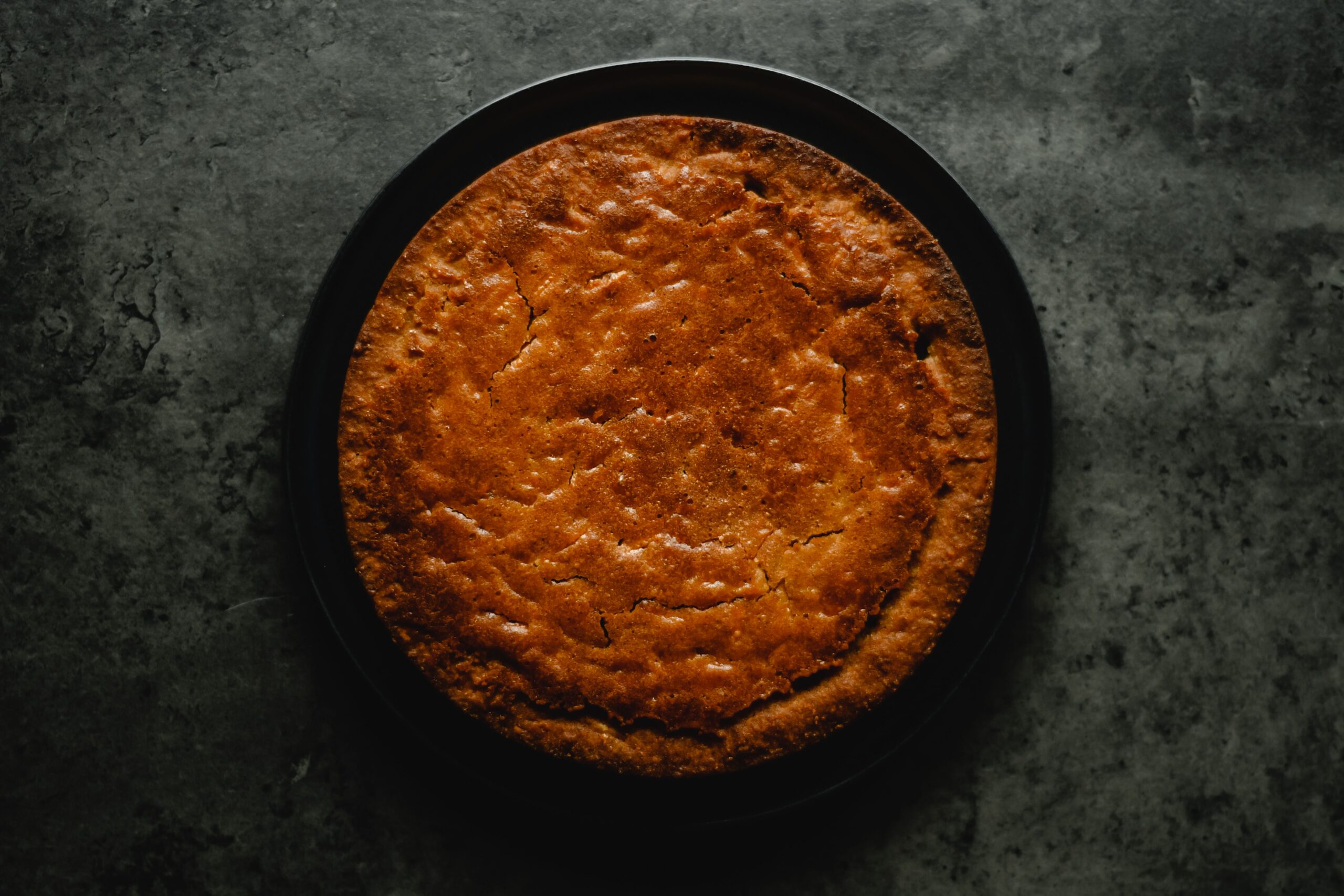
A cake sinks for one of two reasons: the middle hadn’t set when the pan left the oven, or so much gas got into the batter that the structure gave way under it. Nearly every cause below is a version of one of those. You lift the tin out, it looks tall and golden, and three minutes later the center drops into a shallow crater. That drop happens on the cooling rack because the center was never rigid — the oven was holding it up. So the fix is rarely a different recipe. It’s usually the oven temperature, the leavening, or the way you decided the cake was done. The causes below are ranked by how often they turn out to be the real problem.
Find Your Cake in This Table First
Most troubleshooting lists hand you fourteen causes with no hierarchy and leave you to guess. What the collapse looked like narrows it fast, because each cause fails in its own way. Find the row that matches, then read that section.
| What you saw | Most likely cause | Which family |
| Rose well, then dropped in the last ten minutes or the moment the door opened | Center still liquid; structure hadn’t set | Doneness |
| Fell on the rack, 5 to 20 minutes out of the oven | Pulled at the top of its rise, slightly underbaked | Doneness |
| Rose very high, domed and cracked, then collapsed into a dense streak | Too much baking powder or soda | Ingredient |
| Pale, gummy ring around the sunken middle | Oven running cold; batter sat too long before setting | Equipment |
| Sank only in the middle of a 9×13 or a sheet pan | Edges set long before the center caught up | Equipment |
| Barely rose at all, then sagged; crumb tight and heavy | Dead leavening, or the flour was overworked | Ingredient / Technique |
| Sank with a wet band of fruit or vegetable near the base | Moisture-heavy add-ins weighing down an unset crumb | Ingredient |
Rule Out Underbaking Before Anything Else
Check this one first. It’s also the cause people dismiss fastest, because the cake looked done — browned top, clean-ish skewer, 40 minutes on the timer. It still came out too early.
Here’s what heat is doing inside the pan. Cake batter starts as a foam: air and carbon dioxide held in a loose web of fat, egg and flour. As the temperature climbs, starch granules in the flour absorb water and swell, thickening the batter enormously. Egg proteins unravel and bond to each other at roughly the same stage, and together the two turn a liquid foam into a solid, porous crumb. Sugar and fat both delay that changeover, so a rich cake sets later than a lean one. Until it happens, nothing in the pan can hold its own weight.
The center is always the last part to get there. Heat arrives from the pan walls and the oven air, so the edges can be fully set while the middle is still batter with a crust on top. Take it out then and the crust holds a minute or two, then the soft center underneath collapses and pulls the top down. That’s why so many cakes sink after cooling rather than in the oven. The failure was already there, propped up by heat.
So if your cake fell in the middle after baking and the crumb around the crater is damp, dense or slightly gluey, stop investigating. It was underbaked. Everything else on this page is a smaller effect.
Test Doneness Five Ways, Not One
The toothpick is a poor single test. It reads clean in a pocket of set crumb an inch from raw batter, and tells you little about a cake made with melted chocolate or fruit, where wet streaks are normal. Stack the checks instead. It takes about 40 seconds.
1. Look at the edges through the glass. A finished cake has shrunk back from the pan sides by 3 to 6 millimetres, leaving a thin dark rim. If the batter still touches the wall all the way round, it isn’t ready.
2. Watch the surface. Nudge the rack and look for movement in the center. A liquid center ripples; a set one moves as one piece or not at all.
3. Press the middle with a fingertip. It should spring back and leave no dent. A dent that stays means the crumb underneath hasn’t firmed up.
4. Skewer the exact center, not a spot halfway out, and push it to the base. Moist crumbs clinging to it are fine. Wet batter isn’t.
5. Internal temperature is the most objective of the five. Push an instant-read thermometer into the middle, avoiding the pan bottom. Most butter and oil cakes finish between 200°F and 210°F. Light sponges sit near the bottom of that band; pound cakes and Bundts want the top of it. If it reads under 200°F, shut the door and give it 5 more minutes before testing again, then check every 3 to 4 minutes. A cake goes from underdone to dry quickly.
That thermometer step is one of the most useful changes most home bakers can make, and it’s the answer to how to tell if a cake is done without a toothpick. The exact target depends on the cake, and it doesn’t always apply — a molten or custard center is meant to come out well below 200°F, and the recipe should say so.
Check the Oven With a Thermometer, Not the Dial
Ovens lie. A gap of 10°F to 15°F is normal drift, but plenty of working ovens run 25°F or more off the dial, and a badly calibrated one can be off by 50°F. Set 350°F, get 325°F, and every bake time in every recipe you own is now wrong.
A cold oven causes sinking in a specific way. The batter sits in a warm-but-not-hot pan while the leavening works, bubbles rise and pop at the surface, and by the time the starch and eggs set there’s less gas left than the recipe assumed. You get a low, gummy cake with a dip. A hot oven fails from the other direction: the crust sets early, the interior keeps expanding underneath it, and once the pressure has nowhere to go the middle drops as the cake cools.
Oven temperature accuracy is easy to check. Hang an oven thermometer from the middle rack, then give it 20 minutes past the preheat beep before you read it through the glass. Preheating matters more than it sounds. The beep usually comes several minutes before the oven walls have stabilized, and a cake going into an under-heated oven starts the cold-oven failure immediately.
Opening the door worries people more than it should. Each opening costs at least 25°F, more if the door stays open longer, and that cold air hits a batter that may be at its most fragile — but it only matters while the structure is still unset, usually the first two-thirds of the bake and later than that if the cake is running behind. After that a quick look costs very little. Keep the door shut until the recipe’s earliest stated time, then check fast. If you have to rotate the pan for a hot spot, do it once, late, and quickly.
Measure the Leavening, Then Prove It’s Still Alive
Too much baking powder makes a cake sink, and the failure is dramatic. Excess gas inflates the bubbles faster than the batter can set around them. Small cells merge into large ones, the walls between them rupture, and gas escapes through the top. The cake climbs beautifully, domes, cracks, then falls into a coarse streak through the middle. If you also taste something bitter or faintly soapy, that’s confirmation — the flavour comes from unreacted leavening, and it travels with this kind of collapse — the same fault behind a bitter aftertaste in cake.
The usable range for a plain butter cake is roughly 1 to 1.5 teaspoons of baking powder per cup of flour. Much beyond that and you’re relying on luck. An extra half teaspoon doesn’t sound like a mistake worth chasing, but in a 2-cup batter it’s a large percentage increase in gas.
Old baking powder produces the opposite-looking failure with the same ending. Stir a teaspoon into half a cup of hot water. Fresh powder fizzes vigorously within a few seconds; a lazy trickle of bubbles means it’s lost most of its strength. Weak leavening gives a cake that rises poorly and sags as it cools, which is easy to misread and treat by adding more powder — producing the first failure instead. Powder open in a cupboard more than 6 months is worth testing before you trust it.
One timing note if your recipe uses baking soda rather than powder. Soda reacts with acid on contact, so a batter with buttermilk or brown sugar starts releasing gas the moment it’s mixed. Leave it on the counter 20 minutes and much of the rise is gone before it reaches heat. Get it into the oven.
Mix to the Point the Recipe Asks For, Then Stop
Both overmixing and undermixing can sink a cake, so advice to “mix well” is useless. They fail at different stages.
Creaming butter and sugar is where air enters the batter, and 3 to 5 minutes on medium is the usual target for a pale, fluffy mixture. Push well past that and you whip in more air than the batter’s protein and starch can support. Those oversized cells behave like excess baking powder: they expand, merge and collapse. Over-creamed batter looks almost like frosting, and that’s the tell.
Overmixing after the flour goes in is the more common error. Flour plus liquid plus agitation develops gluten, and too much of it gives a tough, tight crumb that rises unevenly and drops in the center. It also knocks out the air you just spent 5 minutes creating. Mix until the last streak of flour disappears, then stop.
Undermixing sinks cakes for a different reason. If the fat and liquid never emulsify, the batter has no stable structure to trap gas. Curdled, split-looking batter is the sign, and the usual cause is cold ingredients. Butter needs to be around 65°F to hold air when creamed; straight from the fridge it is too firm, and a cold egg dropped into softened butter can seize the fat into lumps. That’s why room-temperature ingredients matter here — around 68°F for eggs and dairy. Take them out 40 to 60 minutes ahead, or warm eggs in their shells in a bowl of hot water for about 10 minutes.
Match the Pan to the Batter
Pan size and shape sink cakes reliably, and this is the cause most likely to go unnoticed, because the recipe worked last time in a different tin.
An overfilled pan is the first version. Batter should fill a tin no more than halfway to two-thirds. Beyond that the rising cake climbs above the rim where nothing supports its sides, and it collapses inward as it cools. Doubling a recipe into one tin instead of two is the classic route in.
The second version is a pan too wide and shallow for the batter’s setting speed, and it’s why a cake sinks in a 9×13 pan more often than in two 8-inch rounds. Heat enters from the sides as well as top and bottom, so in a round tin no part of the batter sits far from a hot wall. In a large rectangle the middle is a long way from every edge. Corners set and brown while the center is still liquid, and a skewer near the edge reads clean while the middle has minutes to go. Test large-format cakes in the true center, and expect them to want longer at a lower temperature.
Pan material shifts things too. Dark metal runs the edges ahead of the middle and exaggerates the same problem; glass heats slowly and often wants 25°F less. A Bundt pan’s central tube solves this by putting a hot wall in the middle of the cake, though a deep, dense Bundt batter still needs a thermometer rather than a timer.
Cupcakes sink in the middle for the same reasons in miniature, with one addition. Liners filled past two-thirds leave batter climbing above the tin, and small cakes overbake fast, so people pull them early. Fill to two-thirds and check at the earliest stated time.
Adjust the Recipe if You Bake Above 3,000 Feet
Altitude sinks cakes, and it does it to recipes that worked perfectly at sea level. Lower air pressure lets gas bubbles expand further and faster before the batter sets, so the cake over-rises and then falls. Liquid evaporates more quickly too, leaving the batter drier and weaker.
Above roughly 3,000 feet, start with three changes. Cut the baking powder or soda by about an eighth of a teaspoon for every teaspoon called for, moving toward a quarter teaspoon past 5,000 feet. Raise the oven 15°F to 25°F so the structure sets before the gas over-expands, and shorten the bake to match. Add 1 to 2 tablespoons of extra liquid per cup, with a little more for each additional 1,000 feet. If the cake is rich, an extra egg strengthens the crumb.
Change one thing at a time. These adjustments interact, and altering all of them at once leaves you unable to tell which one worked. The right combination varies with your elevation and your oven, so bakers at altitude usually arrive at their own numbers over several attempts.
Expect Carrot, Banana and Zucchini Cakes to Fight You
Some cakes sink more readily than others, and no recipe warns you. Carrot, banana and zucchini cakes are the worst offenders. Grated vegetables and mashed fruit carry a lot of water, which has to leave the batter before the center can set, and they weigh down a crumb trying to hold itself up. These batters run high in sugar and oil as well, and both push the setting point later.
So a carrot cake reads done on the outside long before the middle is. Bake these lower and longer — 325°F rather than the usual 350°F — and check the center temperature instead of the clock. If your carrot cake sinks in the middle every time, add 10 minutes at the lower temperature before changing anything else.
Heavy add-ins do something related. Chocolate chunks, whole berries and large nut pieces sink through a loose batter and settle near the base, where they hold moisture and form a dense layer that never sets. Tossing them in a spoonful of the recipe’s flour before folding helps, though it won’t save a batter too thin to hold them.
Tiered and deep cakes are the extreme case. A tall pan puts the center further from every heat source than any other format, and that’s where bake-even strips, a lower oven and a longer bake stop being optional.
Save the Cake You’ve Already Baked
Rescue is a choice between leveling and repurposing, and which one you get depends entirely on whether the middle cooked. Judge that first, then match it to the tier below.
| Severity | What you’re looking at | What to do |
| Minor | A shallow dip, crumb cooked through, texture normal | Level the top with a serrated knife, or turn the cake upside down and frost the flat base. |
| Moderate | A crater up to about half an inch deep, crumb cooked but damp at the center | Cut the middle out with a round cutter, fill the hole with cream and fruit, ganache or lemon curd, and frost over the top for a surprise-inside cake. Or crumble the whole thing into a trifle. |
| Major | A wet, batter-like center that never baked | Don’t serve the raw part. Discard the underbaked middle and use only the fully baked outer ring: cake pops, trifle crumbs, or an ice cream topping. |
That last row is a food safety line, not fussiness. Raw flour and raw egg can both carry harmful bacteria, and heat is what removes the risk. An underbaked center hasn’t had enough of it. Returning a cooled cake to the oven rarely works either — the outside dries and hardens long before the raw middle catches up, and the collapsed structure won’t rise again.
Worth saying plainly, a sunken cake tastes fine in almost every case where the middle cooked. It’s a structural failure, not a flavour one. A level cut and a generous layer of buttercream hide most of what went wrong. A cake that shrank away from the pan sides as it cooled is a different problem with a different fix.
Do This Before Your Next Bake
Put an oven thermometer on the middle rack, set the oven to 350°F, and leave it 20 minutes past the preheat beep. Read the number. If it’s more than 15°F off, adjust your dial by that difference for every bake from now on and write the offset somewhere you’ll see it. Then bake your next cake to 205°F in the center instead of to the timer.