Stop Cookies Spreading Too Much: Find Your Cause First
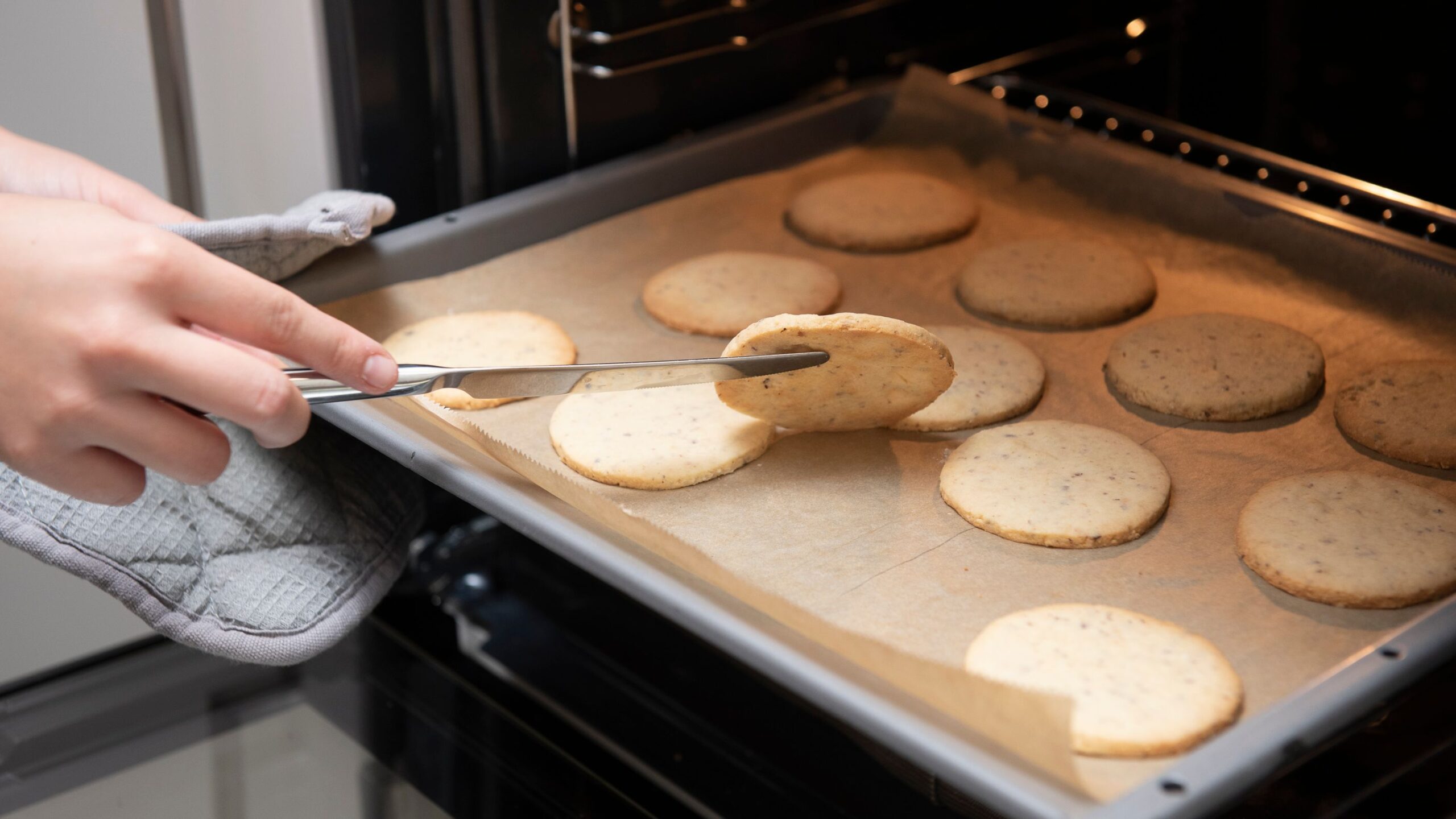
Cookies spread too much when the butter turns liquid before the eggs and starch have set, and nearly every cause on this page is a variation on that one race. You open the oven and the tray is a single sheet of cookie. Edges welded together, middles thin and greasy, half as tall as the photo you were copying. Most guides hand you five suspects and leave you to work out which is yours. That’s the wrong shape for this problem, because your dough and your baked tray both leave evidence. Greasy dough points somewhere different from dough that won’t hold a scoop, and a uniform pancake means something different from a cookie that puffed and dropped. Read the evidence first. Then change the one thing causing it.
The Race Between Melting Fat and Setting Structure
Butter isn’t one substance with one melting point. It’s a mix of fats softening across a range, and the bulk of it goes fully liquid around 90 to 95°F. In a 350°F oven a room-temperature dough ball gets there within the first few minutes.
Structure arrives much later. Egg proteins start denaturing and wheat starch starts gelatinizing at roughly 140°F, and the network they build finally locks the cookie in place. That leaves about 50°F between the fat going liquid and the dough getting any backbone. In that gap the cookie is a hot, sweet fluid on flat metal, flowing outward under its own weight while steam and carbon dioxide push it wider still.
This is why your cookies go flat, and why the fixes look so scattered. Every one does exactly one of two jobs: delay the melt, or bring the set forward. Chilling delays the melt. A hotter oven brings the set forward. Sort any piece of advice into one of those buckets and you can judge whether it applies.
Symptoms That Point to Your Cause
Nobody needs a sixth list of everything that can go wrong. What’s missing is a way to tell which one is happening in your kitchen, and your dough tells you before it reaches the oven. Look at it in the bowl, watch it on the scoop, read the tray.
| What you see | Most likely cause | First thing to change |
| Dough looks slick, fat smearing the bowl | Butter too warm, or creamed too long | Chill portions 30 minutes; start from 65°F butter |
| Dough slumps off the scoop | Too much liquid: oversized eggs or under-measured flour | Weigh the flour; check egg size |
| Every cookie spread the same thin disc | Batch-wide: ratio, butter temperature, or cool oven | Thermometer in the oven before changing anything |
| Cookies puffed, then sank while cooling | Too much leavener, or creamed air with no anchor | Cut the baking soda back, a quarter teaspoon to start |
| Spread wide, still raw in the middle | Oven running cold, or warm dough going in | Raise the oven 15°F; bake from the fridge |
| First tray fine, third tray flat | Dough loaded onto a hot sheet | Rotate two pans, cooling each fully |
Two rows get misread. Cookies that spread and are raw in the middle look like an overspreading problem and usually aren’t. Wide plus underbaked points at heat, not ingredients. An oven reading 350 and delivering 325 hands the butter extra unopposed melting time before the edges set.
Puffy then flat is the other. If the cookie rises properly then subsides into a wrinkled disc as it cools, spread was never the failure. The structure was built on air with nothing to anchor it. Too much baking soda does this, and so does creaming for four minutes when the recipe wanted two. If your cookies have been turning out flat batch after batch and you want the fastest route out, work the table top down: butter temperature first, flour weight second, oven third.
The Ingredient Side: Fat, Sugar, Eggs and Flour
Spread problems on the ingredient side are a wet-to-dry ratio problem in disguise. If you want the short answer to why are my cookies spreading, it’s butter temperature more often than anything else. Not because the other causes are rare, but because butter is the variable that shifts with the weather, the room, and how long you got distracted.
Butter also carries water, roughly 16 to 18% of a standard American stick, and that becomes steam in the oven. Shortening is close to pure fat with a higher melting point, so it stays solid longer and holds the dough up. Swapping a quarter of the butter for shortening is the bluntest anti-spread lever there is, and you pay in flavour. Browning the butter drives off water, but only helps if you chill it back to solid first.
Sugar is the second lever. Granulated sugar dissolves in the dough’s water and liquefies in the heat, and liquid sugar flows. Cutting it by about 10% by weight tightens a spread-prone recipe without making it taste mean. Brown sugar holds water rather than releasing it, so a swap toward brown helps.
Eggs are the quiet one. A large egg is about 50 grams out of the shell, and that’s what almost every American recipe assumes. Bake with extra-large eggs and you add six or seven grams of liquid apiece. Over two eggs that’s most of a tablespoon of unaccounted liquid, enough to slacken a dough visibly. Flour runs the same risk: scooping compacts it, and the same cup can differ by 30 grams or more between two people. A kitchen scale removes that permanently. Measuring by volume, spoon the flour in and level it.
Then the leavener. Too much baking soda is a real cause of spread and easy to do by eye: soda raises the dough’s pH, weakening gluten and speeding browning, and the extra gas inflates the cookie before the structure can hold it. It sets, sinks and reads as flat. Expired leavener gives the opposite failure and the same result, no lift at all, so the dough flows sideways. Baking powder past its best-by date is worth testing before you blame the butter.
Pans, Liners and Oven Heat
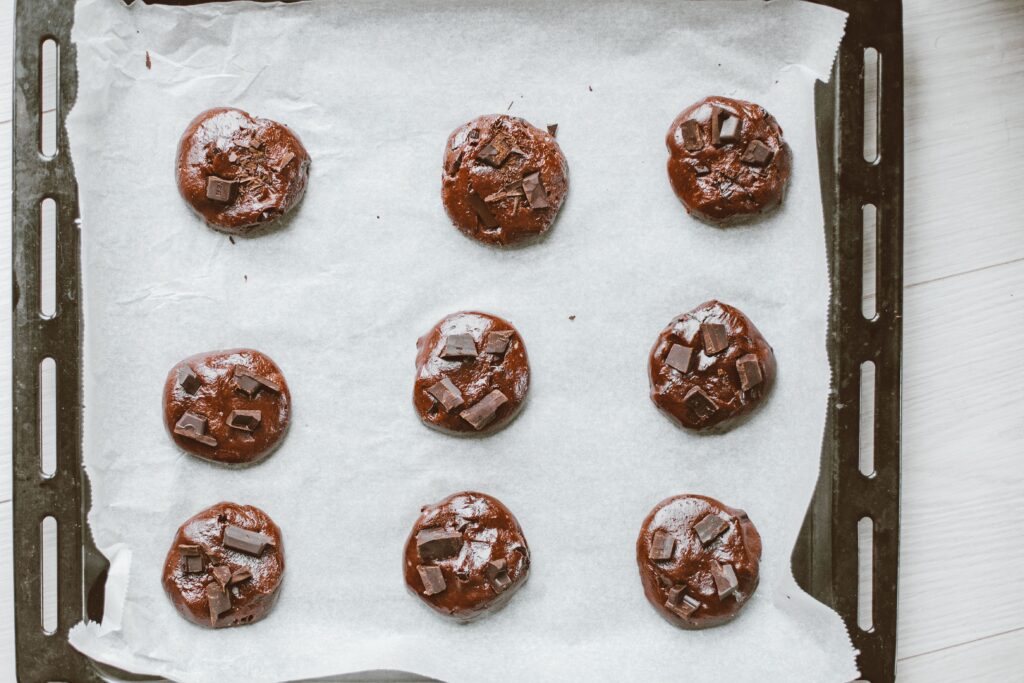
Greasing the sheet is the common unforced error, though not quite for the reason usually given. In a controlled five-lining test, a thin coat of nonstick spray did not widen the cookies much — what it did was fry the edges, which is where the lacy ring around a spread cookie comes from. The ring is reason enough. Don’t grease unless the recipe says to.
Parchment paper is the default worth returning to. It grips slightly, insulates barely, and lets the base set on schedule. Aluminum foil sits at the other extreme, conducting hardest of the three and browning bottoms fast. That conduction buys you nothing on spread, though. A side-by-side lining test put foil widest of the lot, because the surface is slick and gives the dough nothing to hold. Silicone mats are the surprise here: slicker than parchment, and insulating underneath, which delays the base setting and widens the window the dough has to travel. Test kitchens split on this one, and mats differ from each other, so treat it as worth checking rather than settled. Fighting spread on a silicone mat, swap to parchment for one tray and compare. Pan colour works the same way. A dark sheet absorbs radiant heat where a light one reflects it, so the base runs ahead of the middle.
Reusing a hot sheet undoes everything you did in the fridge. Dough on a warm pan starts melting on the counter, before the oven gets a say, which is why the third tray differs from the first. Run two pans and cool each fully. Cold water on the underside speeds that up.
Last, the oven itself. Most ovens beep before preheating has finished, and dough loaded into one still climbing gets a head start on melting. Ovens also drift, so the dial is a target rather than a reading. An oven thermometer costs little and settles it in one bake. Where yours runs cold, raising the setting 15 to 25°F narrows the melt-before-set window directly, the mechanism chilling uses from the other end.
Chilling and the Thirty-Minute Threshold
Does chilling cookie dough stop spreading? Largely, yes. Cold fat takes longer to liquefy, and the sugar has time to pull free water out of the dough. Both push the melt later. What surprises people is where the benefit sits: almost all the spread reduction happens in the first half hour. The gap between no chill and 30 minutes is large. Between 30 minutes and overnight, small, and mostly about flavour rather than shape.
So when you’re deciding how long to chill cookie dough for spread specifically, 30 to 60 minutes in the fridge is the working answer, and a longer rest is a flavour decision you make separately — which is the other half of why you chill cookie dough before baking.
Portion before you chill, not after. A chilled slab warms in your hands while you fight it into balls, and by the third you’ve undone the chill. Scoop onto the sheet, chill the sheet, bake from cold. Fifteen minutes in the freezer is the mid-bake shortcut.
Dough left sitting out is quietly losing what you paid for. Fat can soften back within half an hour on a warm counter, and raw dough carrying egg and untreated flour shouldn’t sit at room temperature beyond two hours anyway, or one hour above 90°F. Keep the waiting trays in the fridge. The honest limit: where the dough has had an overnight chill and still spreads, chilling is not your problem.
Humidity, Altitude and the Kitchen Itself
None of the pages competing for this question mention where you’re standing, which is a strange omission given how much it changes. Does humidity make cookies spread? It does, indirectly, and the route is your flour.
Flour is hygroscopic, meaning it pulls moisture out of the air. A bag left loosely closed through a humid week picks up water you never measured and can’t see. The dough reads stickier and slacker than the recipe describes, and that free water lowers its viscosity, so it flows further before setting. The instinct is to add flour until it feels right. Resist that; you’ll shift the ratio and get a tough cookie. Chill longer instead, or hold back a tablespoon of the liquid and add it only if the dough looks dry. A 78°F kitchen does the same from the other side, softening butter faster than the counter rest the recipe assumed.
Altitude is the bigger effect and the more fixable one. Above roughly 3,000 feet, lower atmospheric pressure lets leavening gases expand faster and liquids evaporate sooner, which leaves the sugar more concentrated and the structure weaker. The cookie flows before it can set. How to stop cookies spreading at high altitude comes down to trimming the leavener and setting the structure sooner.
| What to adjust | At 3,000 feet and above |
| Baking soda or baking powder | Reduce by 1/8 teaspoon for each teaspoon called for |
| Sugar | Reduce by 0 to 1 tablespoon per cup |
| Liquid | Add 1 to 2 tablespoons per cup — this one is for dryness, not spread |
| Oven temperature | Increase by about 25°F |
Cut-Outs, Sugar Cookies and Gingerbread
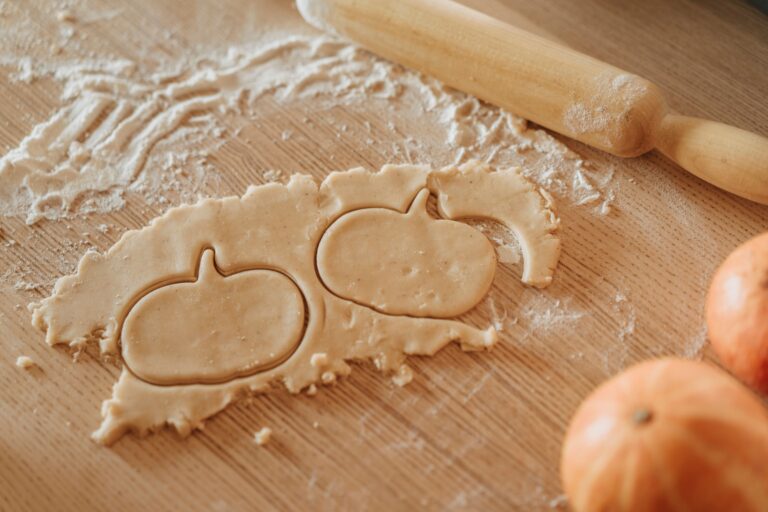
Cut-out cookies are judged on edge definition, so a degree of spread that would be fine on a chocolate chip cookie ruins them. Why are my sugar cookies spreading is usually a recipe question rather than a technique one. Doughs built as cut-out cookies that don’t spread are formulated differently: little or no leavener, since lift is the enemy of a sharp edge; powdered sugar rather than granulated, partly because its cornstarch absorbs moisture; a higher flour ratio. Roll a drop-cookie dough out hoping for clean stars and it works against you.
Two handling fixes matter more than the rest. Chill the cut shapes, not just the slab: ten to fifteen minutes in the freezer on the sheet, right before they bake. And treat re-rolled scraps as a separate batch, since your hands warmed them and you worked them more. Chill scraps before re-rolling.
Gingerbread has its own version. Molasses is liquid and acidic, so it slackens the dough and reacts with baking soda. Gingerbread that spreads is usually over-leavened rather than under-floured, so cut the soda by a quarter teaspoon before you start adding flour and stiffening it. Roll to an even thickness too, because a thin sheet spreads proportionally more than one at a quarter inch.
Rescue for a Batch That Already Spread
You can do more than people think, but the window is narrow. Once the egg and starch network sets, the shape is the shape. Everything below happens in the first minute out of the oven, while the cookie is hot and pliable.
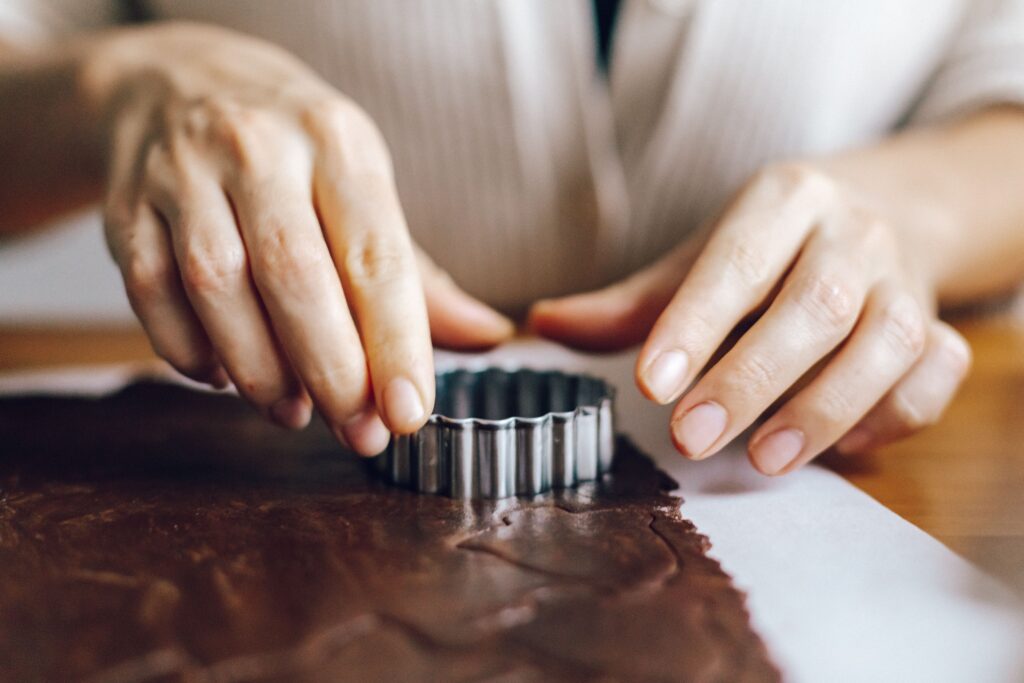
- The cookie cutter nudge: run a round cutter, slightly larger than the cookie, around each one on the hot sheet and swirl. The soft edges pull back into a circle.
- No cutter? Push the edges inward with a spoon, once around each cookie. Faster, less tidy.
- Merged into a slab? Cut the tray into squares while warm and serve as bars. Deliberate beats apologetic.
- Before the next tray: chill the dough hard, 15 minutes in the freezer, and scoop smaller with wider spacing.
- Beyond saving? Crumble the cooled cookies into a crumb crust for cheesecake, or fold them through softened ice cream.
None of that restores height. Reshaping recovers a cookie’s outline, not its thickness, so how to fix cookies that spread too much means stopping the next tray doing it. The rescue is cosmetic. The fix is upstream.
Three Pieces of Standard Advice That Contradict Each Other
Search this problem and you’ll hit flat contradictions between pages that both sound confident. Here’s where they sit, and which side holds up against the melt-versus-set mechanism.
Cold butter. One camp treats it as critical, the other shrugs. Both are partly right, because the temperature governing spread is the dough’s when it enters the oven, not the butter’s when you creamed it. Dough from softened 65°F butter, chilled 30 minutes, beats dough from cold butter baked immediately. Cream at the temperature the recipe needs, then control the dough afterwards.
Overmixing. The claim that overmixing makes cookies collapse gets repeated a lot and dismissed just as often. Sort it by stage and it resolves. Mixing hard after the flour goes in develops gluten, which resists spread, so the cookie gets tougher rather than flatter. Over-creaming before the flour is the version that causes trouble, because it beats in air with nothing to anchor to, which drops as the cookie cools. Overmixing doesn’t flatten cookies. Over-creaming does.
One tray at a time. Treated as a rule by some pages and mocked by others. The tray count was never the mechanism. Pan temperature was. Two cool pans on one rack, spaced so air moves between, bake fine. One pan reused hot three times does not.
Common Questions
Why do my cookies come out flat when baking from scratch, but not with a box mix?
Box mixes are formulated for tolerance. The flour is pre-weighed, so your scooping habit doesn’t matter; the fat is often shortening rather than butter; the leavener is dosed for a wide margin. Your scratch dough has none of that insurance, so every variance shows up in the spread.
What does it mean if the dough spreads too much but the cookies taste good anyway?
Usually that your ratio is fat- and sugar-heavy, which is also why it tastes good. Spread and flavour pull the same direction up to a point. If you like the flavour, don’t rewrite the recipe. Chill harder, scoop smaller, raise the oven 15°F. Those change shape without touching taste.
Can you flatten cookies before baking them?
You can, and for some doughs you have to, but it costs spread control. Flattening removes the height the cookie had to spend, so a pressed ball ends up wider than a tall one from the same dough. Press only doughs that won’t spread on their own: peanut butter, shortbread, thumbprints. For anything already spreading, scoop tall and let the oven flatten it.
What could be causing my cookies to spread after they cool?
Cookies don’t spread once out of the oven, but they settle and flatten, which reads the same on the tray. The usual cause is a cookie pulled while its centre was still fluid. The edges hold, the middle relaxes down, and the whole thing widens as it cools. Leave them on the hot pan two or three minutes, and check the centres look set, not glossy.
Where This Stops Working
There’s a point where the problem stops being technique. Weigh the flour, verify the oven, chill overnight, line the sheet, and if the dough still spreads, the recipe is fat-heavy for the result you’re after. Careful execution can’t rewrite a ratio.
Two variables sit outside your control. Butter brands differ in water content, and higher-fat European-style butters behave differently from standard sticks. A thermometer reading from two years ago is worth retaking.
So change one variable per batch. Weigh the flour first, put a thermometer in the oven second, give the dough its 30 minutes, and judge nothing before then.