How to Store Cake After Baking (and When the Fridge Is Wrong)
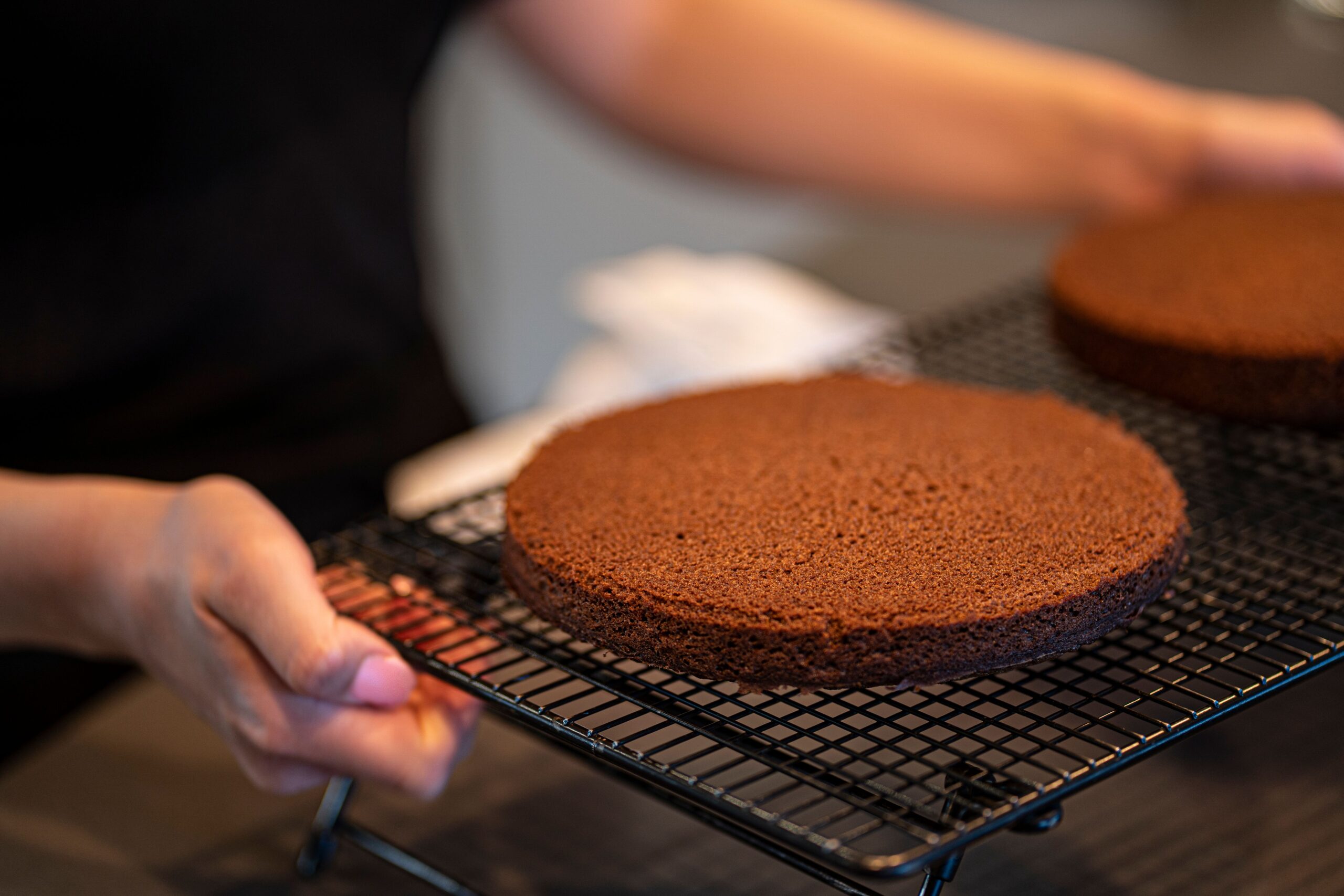
The cake is out of the tin and cool. Nobody is eating it until tomorrow. The counter feels risky and the fridge feels responsible, and for most cakes that instinct is backwards. Covered on the counter, cake holds two to four days. The fridge is where a good crumb dries out. What’s on top of the cake decides the rest.
The Fridge Is the Default Answer, and It Is Usually the Wrong One
Cold does not preserve a crumb the way it preserves milk. Staling has very little to do with water evaporating off the surface, which is why a well-wrapped cake still goes firm and crumbly on day four. The starch is what changes. During baking the starch granules swell and open up; as the cake cools they start reassembling into an ordered, crystalline arrangement, squeezing water out of the crumb structure as they go. That process is called starch retrogradation, and it is what stale means. The cake feels dry while still holding most of the water it came out of the oven with.
The rate depends on temperature, and refrigerator temperature is close to the worst possible. Around 40°F the starch recrystallizes faster than anywhere else on the domestic scale — faster than a warm kitchen, and vastly faster than a freezer. One night in the fridge can cost you what several days on the counter would. Cold moving air pulls moisture off any exposed surface as well, and an uncovered cake takes on the smell of whatever else is in the fridge. Odor absorption is not subtle: onions, garlic and last night’s curry all end up in the buttercream.
So can you put cake in the fridge after baking? Yes, but do it for a reason rather than by default. The reason is almost always the frosting or the filling, and almost never the cake itself. Keeping cake from going stale comes down to two moves: seal the surface, and keep it off the fridge shelf unless something perishable forces you there. The same mechanism drives how to store banana bread after baking, and it lands in the same place — counter first, freezer second, fridge only when you have to.
What’s on Top Decides Where the Cake Goes
One question settles most of this. Is anything on or in this cake perishable? Bare layers, a sugar glaze, American buttercream and fondant are all stable at room temperature. Cream cheese frosting, whipped cream, ganache made with cream, custard, mousse and fresh fruit are not. Sort the cake into one of those two piles and the shelf picks itself.
| Cake and what’s on it | Where it goes | How long it holds |
| Unfrosted layers, uncut | Counter, double-wrapped in plastic | 2–3 days |
| Unfrosted layers you need past day three | Freezer | 2–3 months |
| American buttercream, uncut | Counter, under a cake dome | 3–4 days |
| Fondant-covered | Counter — never the fridge | 3–4 days |
| Ganache made with cream | Fridge, in a sealed container | 3–4 days |
| Cream cheese or whipped cream frosting | Fridge, out for serving only | 3–4 days |
| Custard, mousse or fresh fruit filling | Fridge | 2–3 days |
| Any cake, already cut | Wherever its frosting says, cut face sealed | Knock a day off |
For a frosted cake overnight, a cake dome or a large upturned bowl beats plastic wrap every time, because wrap pressed onto buttercream lifts the finish off when you peel it back. An airtight container works if the cake fits without touching the sides. Keep it in a cool, dry spot, out of direct sunlight and well away from the oven or the stovetop. A frosted cake at room temperature holds three to four days when the frosting is shelf-stable. When it isn’t, you are not counting in days at all.
In the fridge, cake keeps three to four days before the texture stops being worth it, and the safety limit for the perishable ones lands in the same place. Take a chilled cake out an hour before serving; if the frosting is perishable, that hour counts against the two-hour limit below. Cold butter reads as dry no matter how good the crumb underneath is.
Sugar Decides Whether Frosting Needs the Fridge, Not Dairy
The rule you’ll read everywhere is that dairy means refrigeration. Butter is dairy, and a stiff American buttercream sits happily on a counter for days. Milk is dairy, and a splash of it in that buttercream changes nothing.
What matters is water activity — the share of water in the frosting that is free for bacteria to use rather than locked up by sugar. Below roughly 0.85, a frosting is not considered a food that needs temperature control at all. A plain American buttercream, mostly powdered sugar beaten into butter, measures around 0.80 and clears that line comfortably. Beat cream cheese into it and the number can climb to about 0.91, depending on how much sugar goes in against it — the cheese brings a lot of water with it, and at typical ratios there isn’t enough sugar to tie that water up. Cooking doesn’t rescue a frosting either. A cream-heavy ganache measures about 0.88 after being heated and still needs the fridge.
So yes, cream cheese frosting needs to be refrigerated, along with anything built on whipped cream, egg whites, egg yolks, custard or fresh fruit. That sweeps in Swiss and Italian meringue buttercream too. Two hours is the working limit for a perishable-frosted cake sitting out, and one hour if the room is above 90°F. The part almost nobody says out loud: those two hours are cumulative. A cake that sat on the table for ninety minutes at lunch has thirty minutes left in it at dinner, not a fresh two hours.
If you don’t know what’s in the frosting, chill it.
That has two consequences worth planning around. Transport counts against the clock, so chill the cake hard before it goes in the car and get it back into cold storage as soon as it’s served. And canned frosting is a different animal from homemade: a tub is formulated for a supermarket shelf, so a cake finished with it behaves like buttercream. Homemade doesn’t get that latitude.
A Cut Cake Stales From the Face You Cut
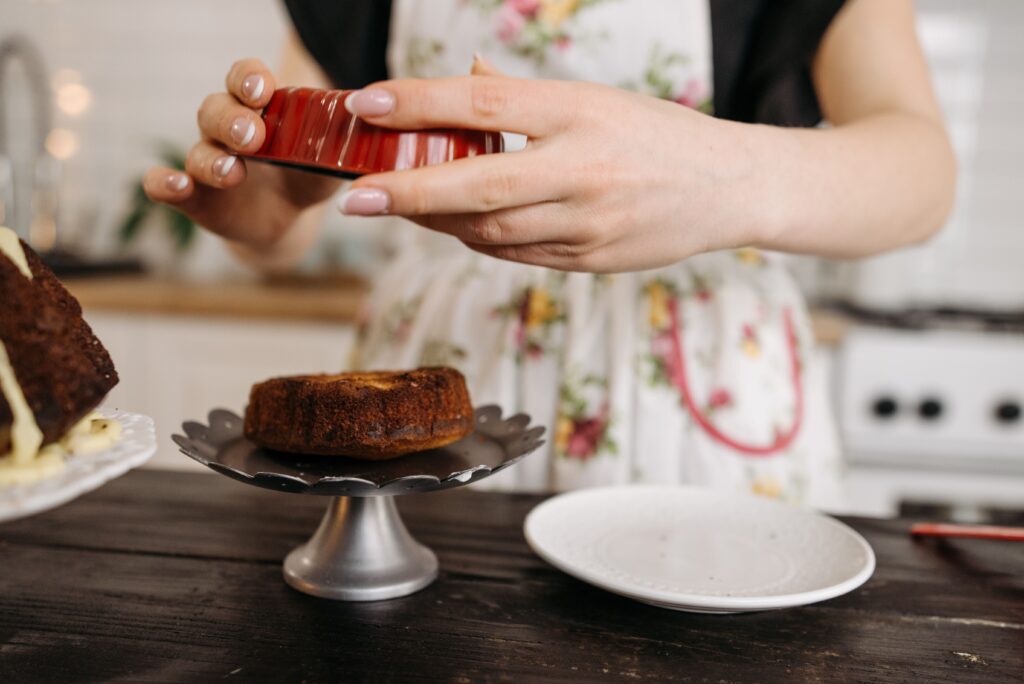
Cutting the first slice changes the storage problem. Up to that point the crust and the frosting were doing the sealing for you. Now there’s an open crumb face with nothing on it, and that face dries faster than the rest of the cake ever will. A cake that was perfect on Tuesday reads as day-old on Wednesday after one slice came out of it.
Press plastic wrap directly onto the cut sides, skin-tight against the crumb, and leave the frosted surfaces alone. If the cake is going back out on the table, a thin skim of leftover frosting over the exposed section seals just as well and doesn’t leave the flat, pressed edge that wrap does. The old bread-slice trick works too: pin a slice of sandwich bread against the cut face with a toothpick and it gives up its moisture to the cake instead of the other way round. Be honest about what that buys you. It slows surface drying, and does nothing to the retrogradation running right through the crumb.
Freezing Is the Only Storage That Stops the Clock
At 0°F the starch can’t reorganize itself, so staling effectively halts rather than slowing down. Frozen cake has a reputation it hasn’t earned. A layer wrapped and frozen on the day it was baked, then thawed properly, comes back closer to fresh than a three-day-old cake off the counter. If you know on Monday that nobody is eating this until Saturday, freeze it on Monday. Waiting until it starts to go is the mistake.
1. Cool the cake completely, all the way through. Wrapping while any warmth remains traps steam, which becomes ice inside the wrapping and a wet surface on thawing.
2. Level the layers now if you plan to. Trimming a frozen layer is harder and makes far more mess.
3. Wrap each layer tightly in plastic wrap, pressing the air out as you go. Then add a second layer of aluminum foil. Freezer burn prevention comes down to blocking dehydration, and two barriers do that far better than one — this is the step that answers how to freeze cake without drying it out.
4. Stack layers with cardboard cake rounds between them if they’re going on top of each other, so nothing arrives with a dent in it.
5. Label with the date. Two to three months for unfrosted layers, one to two months for a frosted cake before the texture starts to slide.
6. Thaw in the fridge overnight with the wrapping still on. Allow at least eight hours for a single layer and closer to 24 for a whole cake.
7. Let it come to room temperature still wrapped, another 30 to 60 minutes, before you unwrap and frost or serve.
Steps six and seven are the ones people skip, and they’re the ones that matter. Unwrapping a cold cake in a warm kitchen pulls a film of condensation straight onto the crumb and you get a tacky, damp surface that frosting won’t sit on. Leave the plastic on and the water forms there instead. Wipe it off and unwrap a dry cake.
Freezing a frosted cake needs one extra move at the start: set it on a tray, unwrapped, and freeze it until the frosting is hard all the way through, then wrap it. Wrap soft buttercream and you’ll pull the finish off with the plastic. Fondant is the difficult case, because it takes on condensation badly and can thaw out sticky and blotchy, so bring a fondant cake back very slowly and expect to touch it up. Whipped cream and cream cheese frosting both break on thawing, grainy and weeping, and neither is fixable. Freeze those cakes as bare layers and frost after thawing. Delicate piped work is the same story: it survives the freezer better than it survives the thaw.
A Few Cases the Chart Doesn’t Settle
If I cook a cake the night before my party, how should I store it?
Bake it, cool it, wrap the bare layers and leave them on the counter overnight. Frost in the morning. Unfrosted cake keeps better than frosted cake, the frosting looks sharper when it’s fresh, and firm, fully cooled layers are easier to stack and crumb-coat anyway. If it has to be finished the night before, put it under a dome and keep it off the fridge shelf unless the frosting is perishable.
What is the best way to store a sponge cake?
Sponge stales faster than anything else here. It’s low in fat and high in air, so it has less to hold moisture with. Airtight container, counter, two days at the outside, and into the freezer if there’s any chance it’s waiting longer than that. Keep it out of the fridge — a sponge goes from tender to dry in a single night in there. Filled with cream, it stops being a two-day cake and becomes a two-hour one.
How to store a moist chocolate cake?
Same rules, slightly longer runway. Oil-based chocolate cakes hold onto moisture better than butter cakes and stay good for three to four days covered at room temperature. The fridge is worse for them than for most, because chilling firms the fat and the cake reads as dry even when the crumb is fine. If it has been chilled, give it a full hour on the counter before anyone tastes it.
How long is cake safe to eat?
Safe and good are two different questions. A plain or buttercream-frosted cake stays safe on the counter well past the point where it’s pleasant, because sugar and a fairly low free-moisture content keep bacteria from getting going. Perishable frostings and fillings are the ones with a real safety clock: three to four days refrigerated, then out. Throw away anything with visible mold, a sour or fermented smell, or a filling that has separated or gone watery. Mold on a cake means the whole cake goes, not just the part you can see — it’s a moist food and the threads run further than the fuzz does.
Check These Before You Put It Away
- Is anything on or in this cake perishable? That answer picks the shelf, not the cake itself.
- Is it completely cool? Wrapping a warm cake traps steam and leaves the top wet.
- Is the cut face sealed, either with wrap pressed onto the crumb or a skim of frosting?
- Is it somewhere cool and dry, out of the sun and away from the oven?
- Will it be eaten within three days? If not, freeze it today rather than on day three.
- Coming out of the freezer? The wrapping stays on until the cake is back at room temperature.
- Perishable frosting sitting out? Two hours total across the day, one hour above 90°F.