Cookie Sheet vs Baking Sheet (The Three-Minute Difference)
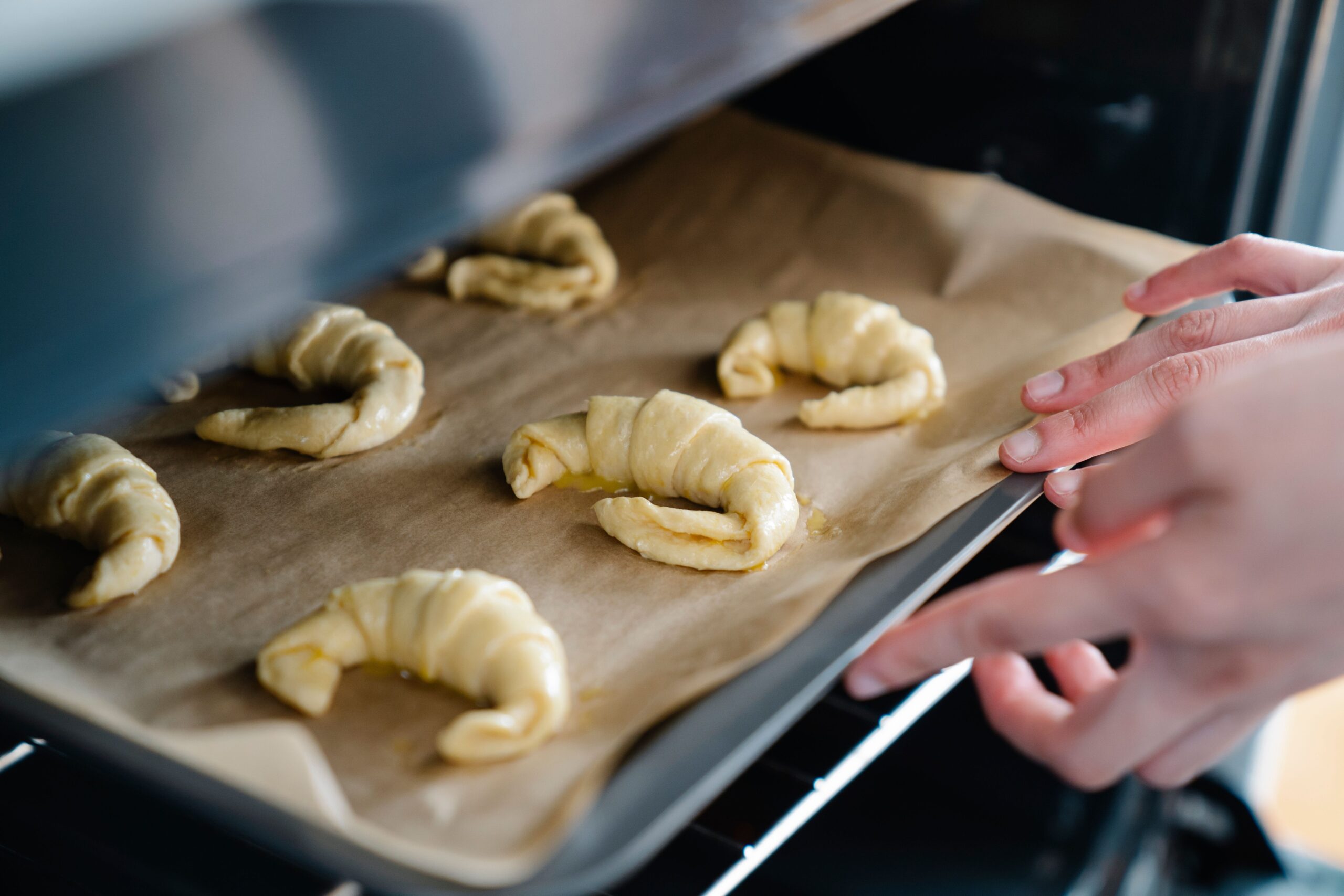
A cookie sheet has no rim worth the name — at most a low lip on one or two edges to grab by. A baking sheet has a rim about an inch high on all four sides. That one difference decides how hot air moves across your food, which pan spills and which one contains, and how long the same batch of cookies takes. If you can only own one, own the baking sheet. Then read the part about cookies.
Rims, and the Air Around Them
A cookie sheet is a flat piece of metal with a raised lip on one or two edges, sometimes a rolled handle, and at least two open sides. Nothing stands between the food and the edge of the pan. A baking sheet is the same flat piece of metal with a rim running the whole way around, usually right at an inch. In a professional kitchen the second one is called a sheet pan, and half the confusion in the baking sheet vs cookie sheet vs sheet pan question comes from that: sheet pan and baking sheet are the same object under two names, and cookie sheet is the odd one out.
The rim is not decoration. Heat rises off the element in the floor of your oven and moves through the chamber in currents. When those currents reach a rimmed pan, the raised edges deflect them upward and over the top of the food, sending a good share of that moving air to the roof of the oven instead of across your cookies. A rimless sheet has nothing to deflect anything. Air circulation over the surface is unobstructed, so the current stays in contact with the dough.
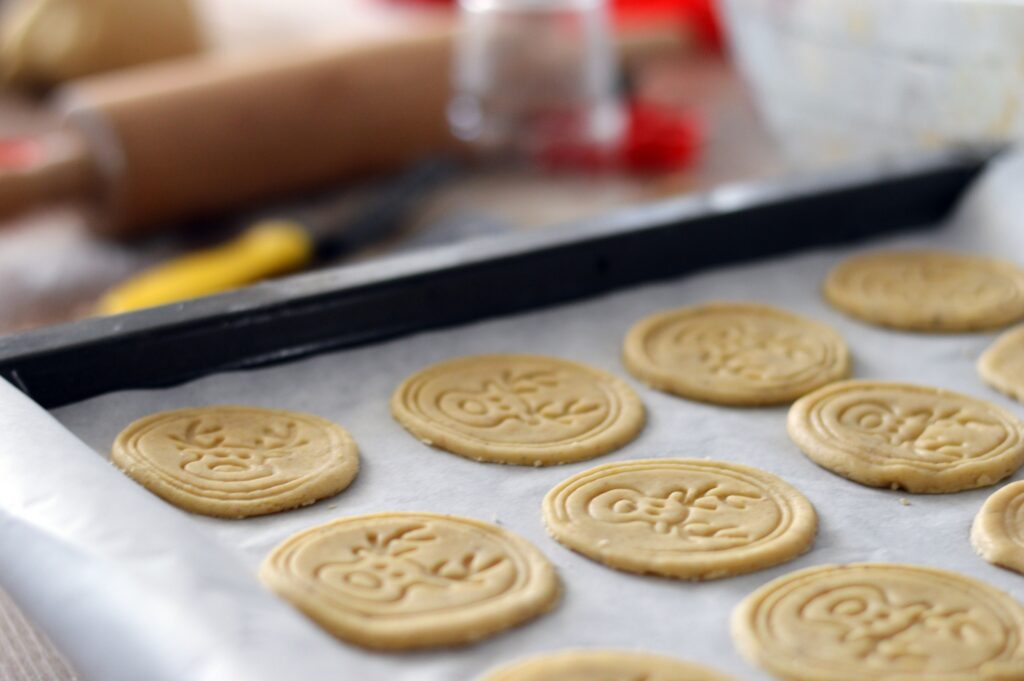
So why don’t cookie sheets have raised edges? Three reasons, and airflow is only the first. The second is removal: you can land a spatula flat on the pan from any angle, or grab the corner of a parchment sheet and slide a whole batch off in one motion, without lifting anything over a wall. The third is surface area. On the same footprint of metal, a rimless pan gives you more usable space, so twelve cookies can spread without running into a raised edge or each other.
Cookies leak almost nothing. No batter, no juice, and no more rendered fat than a sheet of parchment will hold — which is the whole reason a rimless pan exists as a product at all.
The Three-Minute Gap
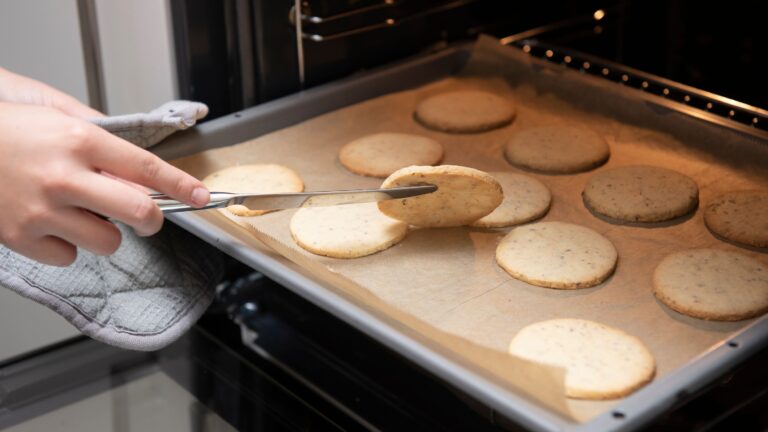
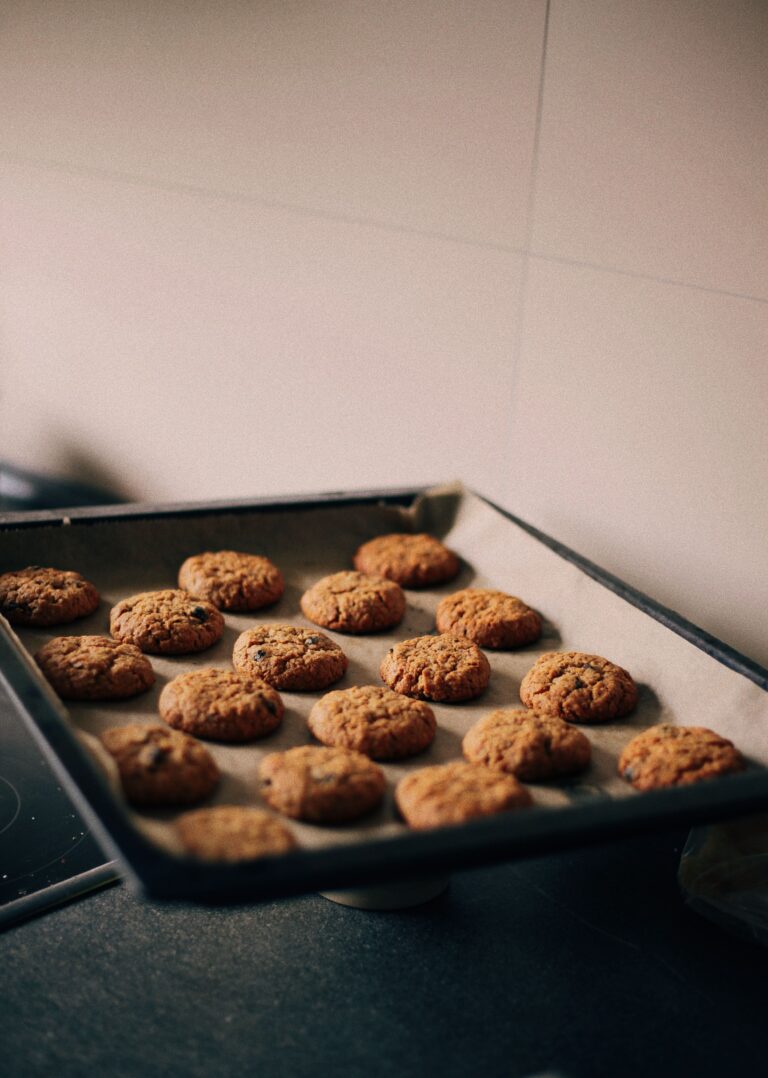
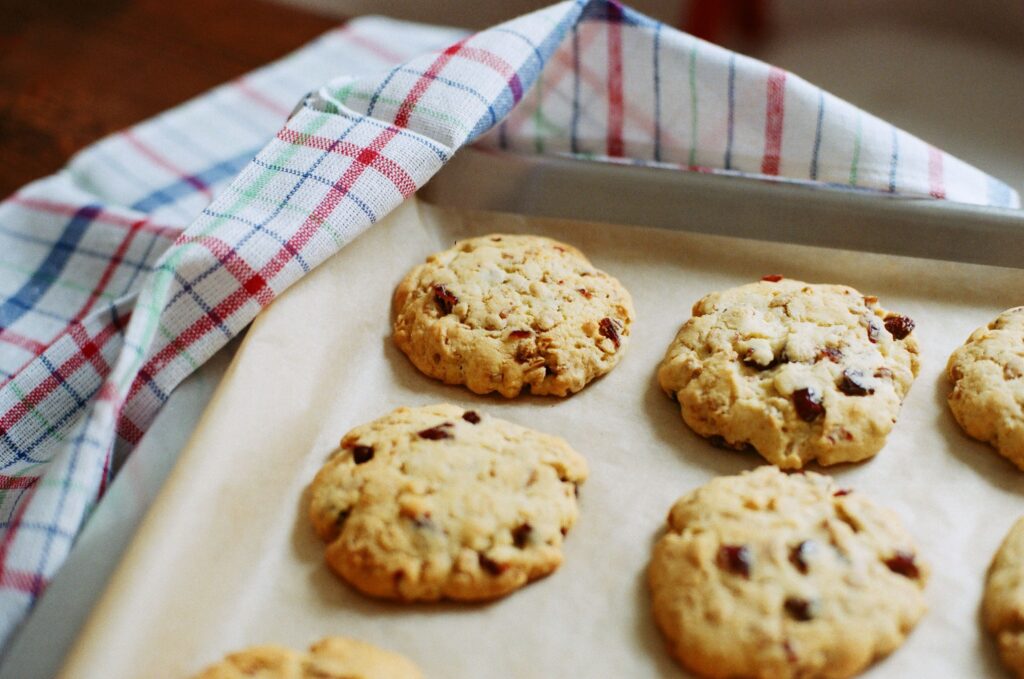
Do rimless cookie sheets bake faster? Yes, and the size of the difference has been measured rather than assumed. America’s Test Kitchen baked two identical batches of cookies — one on a rimless Vollrath cookie sheet, one on a Lincoln Foodservice pan with a one-inch rim — successively on the same oven rack. The rimless batch browned faster and came out about three minutes ahead. At the point the rimless cookies were done, the batch on the rimmed pan was still underdone.
Evenness was not the issue. Both batches came out uniformly pale gold, so the old advice about rimless pans baking more evenly doesn’t hold up. What holds up is the timing.
Three minutes sounds trivial until you put it against the bake. A standard drop cookie is in the oven for ten to twelve minutes. Three minutes is a quarter of that — the distance between chewy in the middle and an edge you can hear. Against a tray of potatoes at 425°F for forty minutes it’s noise. The gap only matters on short bakes, and it counts for less the longer the bake runs.
The practical consequence: a recipe’s stated time assumes a pan, and it usually assumes a rimmed one, because that is what most home kitchens have. Move that recipe onto a rimless sheet and check two minutes before the timer. Move it the other way and expect to add two or three. If your cookies have been coming out darker than the photo since you bought a new pan, the pan is a likelier culprit than the dough. If the trouble is shape rather than colour, though, the pan is not where to look — that is a question of why cookies come out flat and thin.
Sizes, Standards, and the Unstandardized One
Sheet pans are standardized, and the names are fractions of one commercial original. A full sheet is 18 by 26 inches and is built for a commercial oven; measure before you buy one, because it will not fit in most domestic ovens. A half sheet is 18 by 13. A quarter sheet is 13 by 9½, with the same one-inch rim, which is not the same object as the 13 by 9 pan you bake brownies in — that one has walls at least two inches tall. An eighth sheet runs about 9½ by 6½ and fits a toaster oven.
For half sheet pan vs quarter sheet pan, the half sheet is the home default and the reason recipes say “a sheet pan” without qualifying it. The quarter earns its place for small batches, for toasting a handful of nuts, and for freezing portioned cookie dough without giving up a whole freezer shelf. Check your oven before committing: the limiting dimension is depth rather than width — racks in a standard 30-inch range run about 24 inches across but only about 14 to 17 inches from front to back, and you want a finger of clearance so air can move around the rim.
Cookie sheets have no standard at all. Retail listings run from about 12 by 16 to 14 by 17 inches, with a good many sitting at 14 by 16, but the dimensions are whatever the manufacturer chose, and two sheets sold under the same description can differ by two inches in either direction. Nobody agreed on a size, probably because there was never a commercial rack system forcing them to. When a recipe specifies a sheet pan, it means the half sheet. When it says cookie sheet, it means a flat pan, roughly.
Jelly Roll Pans
A jelly roll pan is 15 by 10 inches with a one-inch rim — smaller than a half sheet, rimmed on all four sides, and part of the same family. So is a jelly roll pan the same as a baking sheet? Same construction, different footprint. Anything you would do on a half sheet you can do here with less room.
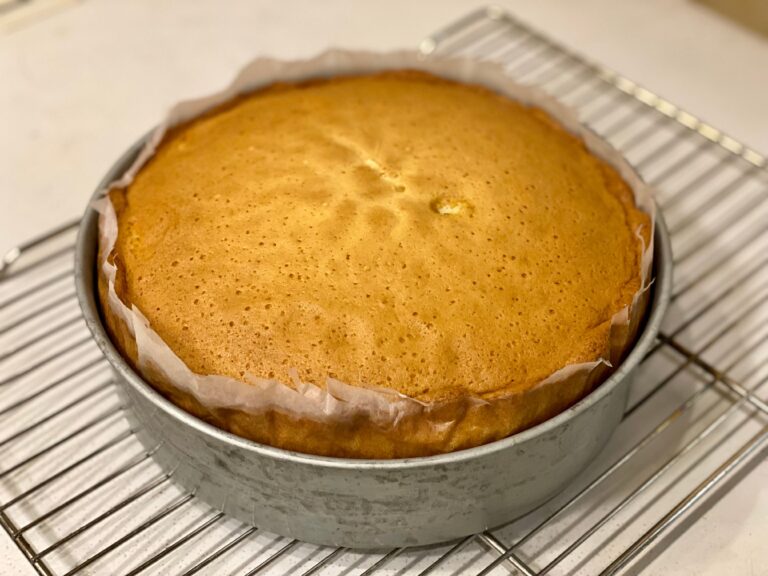
What is a jelly roll pan used for, specifically: a thin sponge cake baked to a thickness that will roll into a spiral without cracking down the back. The dimensions are the point. Spread that same batter across a half sheet and it bakes thinner, dries out faster, and splits when you roll it. The difference between a cookie sheet and a jelly roll pan is the rim and a tighter footprint, and only one of them can hold batter.
Aluminum, Nonstick, and Insulated
Material changes results more than the rim does, and this is where cookie sheet vs baking pan stops being a useful question — a bad cookie sheet loses to a good baking pan every time. Uncoated aluminum is the standard in professional kitchens because it conducts heat quickly, and its even heat distribution is what gives you the same color at the edge of the pan and in the middle. It also heats and cools fast, so it recovers between batches. Its weakness is reactivity: acidic foods like tomatoes, lemon, and vinegar-based marinades will react with bare aluminum, sometimes leaving a metallic edge on the flavor and a dull patch on the pan. Parchment paper solves that for a few cents a sheet.
Aluminized steel is a steel core with an aluminum coating. It is stiffer than pure aluminum and resists warping better. Stainless steel is non-reactive and close to indestructible, but it conducts poorly, so it heats slower and browns less evenly. It is a fine roasting pan and a second-rate cookie pan.
For nonstick vs aluminum cookie sheet, the deciding factor is color rather than the coating. Dark surfaces absorb more radiant heat, so a black nonstick pan runs hotter at the base and browns cookie bottoms faster than a light one. Most nonstick sheets are dark. If yours is darker than a light gray and the bottoms keep burning, drop the oven temperature by 25°F and check early. A light uncoated pan with parchment paper releases just as well and gives you one less variable.
Insulated cookie sheet pros and cons come down to one design choice: two layers of metal with an air gap between them. The air is a poor conductor, which is the entire point. The pro is that burning a cookie bottom on one is close to impossible, which makes it useful for thin, delicate, pale cookies that scorch on anything else. The con is the same fact from the other side. Heat reaches the dough so slowly that cookies can sit in the oven long enough to dry through the middle before the base takes any color at all. If you want crisp edges or a browned bottom, this is the wrong pan, and it is the wrong pan for roasting anything.
Two more sit on the same shelf. French black steel browns hard but rusts if you leave it wet. Glass heats slowly and holds that heat after you pull it out, pushing edges past done while the middle catches up. Neither belongs in a cookie rotation.
Side by Side, on the Axes That Decide It
| What it comes down to | Cookie sheet (rimless) | Baking sheet / sheet pan (rimmed) |
| Airflow across the food | Unobstructed — current sweeps straight over | Rim deflects the current up and over the top |
| Bake time, standard cookies | About 3 minutes faster | Baseline; still underdone at the rimless finish |
| Anything that runs — oil, juice, batter | Runs off the edge onto the oven floor | Contained by the one-inch rim |
| Getting the batch off | Spatula from any angle; parchment slides off whole | Lift everything over a wall |
| Usable surface, same footprint | Larger | Smaller — the rim eats the perimeter |
| Jobs it covers | Cookies, scones, biscuits, reheating flat things | Cookies, roasting, sheet cakes, bacon, sheet-pan dinners, casseroles |
| Sizes you can rely on | None standardized; roughly 12 × 16 to 14 × 17 inches | Full 18 × 26, half 18 × 13, quarter 13 × 9½ |
Swaps and Their Limits
Can you use a baking sheet instead of a cookie sheet? Yes, and most people do. Add two or three minutes, expect bottoms a shade paler, and accept that lifting the batch off is fiddlier. Nothing is lost. The reverse swap is the one with rules, because a rimless pan holds nothing at all.
Which is better for roasting vegetables, cookie sheet or baking sheet? The baking sheet, without qualification. Oil and vegetable juices run, and on a rimless pan they run off the edge, onto the oven floor, where they smoke and then burn on. Same for bacon, chicken thighs, anything marinated. Can you bake a cake or brownies on a cookie sheet? No — batter is a liquid and it needs walls. A sheet cake goes in a half sheet or a jelly roll pan, and the rim is what makes it a cake instead of a spill.
For how to substitute for a cookie sheet when you don’t own one, the best answer is already in your cupboard:
- Turn a baking sheet upside down. The flat underside is a rimless surface, the airflow benefit is real, and it also stands in for a pizza peel or a baking stone at a pinch.
- A quarter sheet or a jelly roll pan works for a half batch — smaller, rimmed, and the timing shifts by two or three minutes.
- The base of a roasting pan or a large flat casserole dish will take cookies, though heavy stoneware and glass both run slower than metal.
- Aluminum foil doubled over and pinched into a rim is a one-off rescue, not a plan. It buckles, it conducts unevenly, and anything heavy tips it.
Parchment is the piece that makes all of this easier and it costs almost nothing. It releases without grease, keeps acidic food off bare aluminum, saves the scrubbing, and lets you slide a finished batch straight onto a rack. What it cannot do is change the temperature of the dough going in, which is its own question like should you chill cookie dough before baking?
Buying Criteria
Material selection matters, but most of what separates the best cookie sheets for baking from the ones that warp in their first month is construction — and you can assess nearly all of it with your hands in the shop.
- Weight. Pick it up. A thin pan flexes and a heavy one doesn’t, and gauge is the number behind that feel — lower numbers mean thicker metal, so look for 18-gauge or heavier in aluminum or aluminized steel.
- The rim. A rolled or encapsulated steel rim acts as a frame around the flat surface and, together with thick metal, is what keeps a pan flat.
- The oven-safe temperature, where one is printed. It is a coating limit rather than a quality mark — nonstick pans commonly cap out at 450°F, and going past it is what degrades the surface. Bare aluminum and aluminized steel have no coating to lose, which is why most of them carry no rating at all.
- A light, uncoated surface for baking. Save the dark nonstick for roasting, where fast browning is the goal.
- Size against your own oven. Measure the rack width between the guides before you buy, not after.
Warping is worth understanding because it is the failure that ends most pans, and it isn’t a defect. Metal expands when it heats. Slide a cold pan into a hot oven and the wide flat base heats and expands faster than the raised edges holding it, and the stress along that join makes the sheet flex — that’s the bang you hear from a cheap tray soon after it goes in. Thick metal and a reinforced rim reduce the movement rather than eliminating it. What you can control is the shock: never run a hot pan under cold water, and let it cool on the stovetop before it goes near the sink.
Care is short, and it comes down to avoiding rust and warping. Dry uncoated aluminum and any steel pan properly — standing water marks aluminum and rusts bare steel. Keep it out of the dishwasher, where detergent dulls and darkens the surface. Don’t cut on a nonstick coating.
Which Pan for Which Kitchen
Buying one pan, and you cook more than you bake? Take an uncoated aluminum half sheet pan at 18 by 13 with a reinforced rim. It roasts, it takes a sheet-pan dinner, it holds bacon fat, and it does cookies at a three-minute penalty you can set a timer around. Buying two of those beats buying one of each.
Baking cookies most weeks, or four dozen at a time? Add a rimless cookie sheet as the second pan rather than the first. The parchment slide matters more than the three minutes at that volume, and the extra surface means fewer rounds through the oven. Keep it for cookies so it stays light.
Small oven, or baking for one or two? A quarter sheet at 13 by 9½ gets more use than a half sheet you have to angle in. Swiss rolls and thin sponges make the jelly roll pan a requirement rather than a duplicate. And when cookie bottoms burn no matter what you do, an insulated sheet is built for that exact problem — unless you want any color on the base, in which case it won’t help you at all.
Who should skip the sheet pan and buy the cookie sheet first? One person: the baker who makes cookies and biscuits and nothing else, who never roasts a vegetable or bakes a sheet cake. That’s a genuine case and it’s a small one. For everyone else the rimmed pan comes first, and the cookie sheet is the upgrade you buy once cookies became a habit rather than an occasion.
What the Pan Can’t Fix
Swapping pans changes your timing by two or three minutes. It doesn’t change dough that went into the oven too warm, an oven running 20°F above its dial, or a recipe written for a kitchen that isn’t yours. When cookies spread into one continuous sheet, the pan isn’t the problem.
The other limit is that your pan is not a fixed quantity. The half sheet you have roasted on for six years is darker than the one in the box, and darker means faster browning, so the times that worked in year one run slightly hot by year six. Nothing on the label tells you that. Whichever pan is in the oven, check the cookies two minutes before the timer goes.