How to Know If Cookies Are Undercooked — or Only Look It
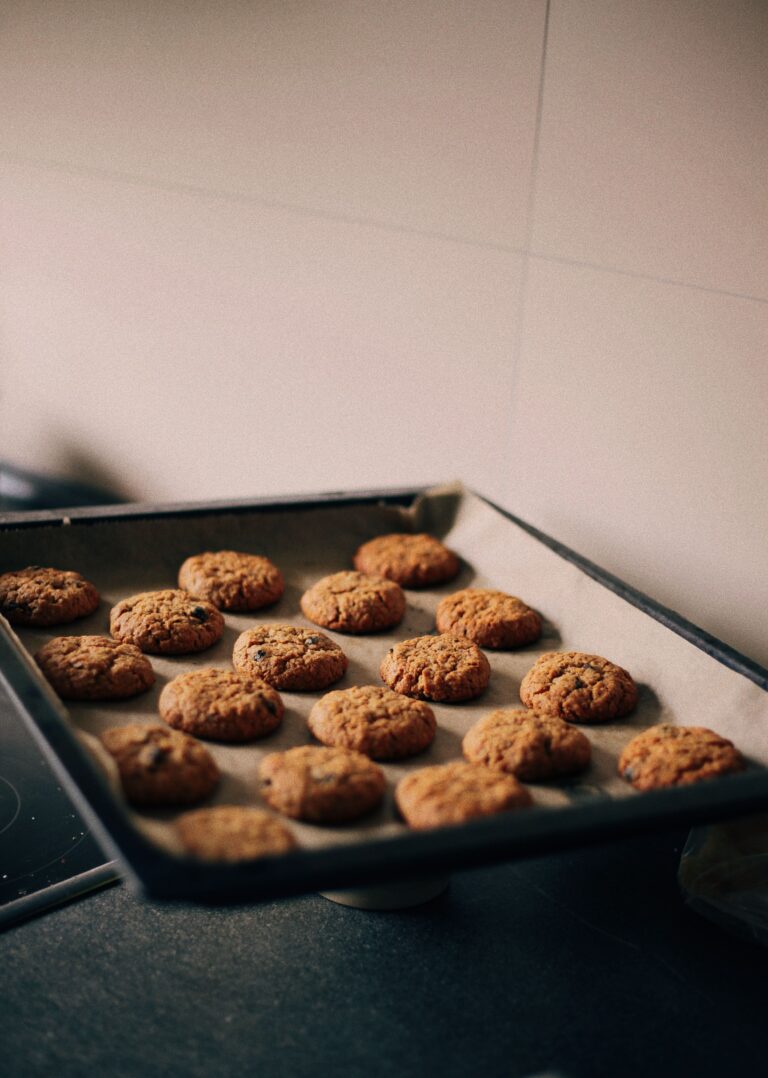
The tray comes out at eleven minutes. The edges are set and lightly browned, the middles look wet, and one of them dents under your finger and stays dented. That’s not a verdict yet. Cookies do a real amount of their cooking after they leave the oven, so the pale middle you’re staring at might be finished already.
A Cookie Keeps Cooking After It Leaves the Oven
Cookies set when their egg proteins coagulate, their starches gelatinize and their melted butter cools back into a solid. None of that stops the moment the oven door opens. The baking sheet underneath is still carrying a large amount of stored heat, and it keeps pushing that heat up through the base of every cookie sitting on it.
The usual figure is three to five minutes of further cooking. Thickness and pan weight move it: a thick bakery-style cookie on a heavy half-sheet carries over noticeably more than a thin one on a flimsy tray. This is also why recipes tell you to pull cookies looking slightly underdone. Pull them looking finished and they finish somewhere past finished — dry, with hard edges, by the time they’re cool.
So the useful rule is a timing rule. Judge doneness after the cooling, not during it. Anything decided in the first thirty seconds on the counter is a guess about a cookie that hasn’t stopped changing yet, which is exactly why so many cookies look undercooked but aren’t.
What Does an Undercooked Cookie Actually Look Like?
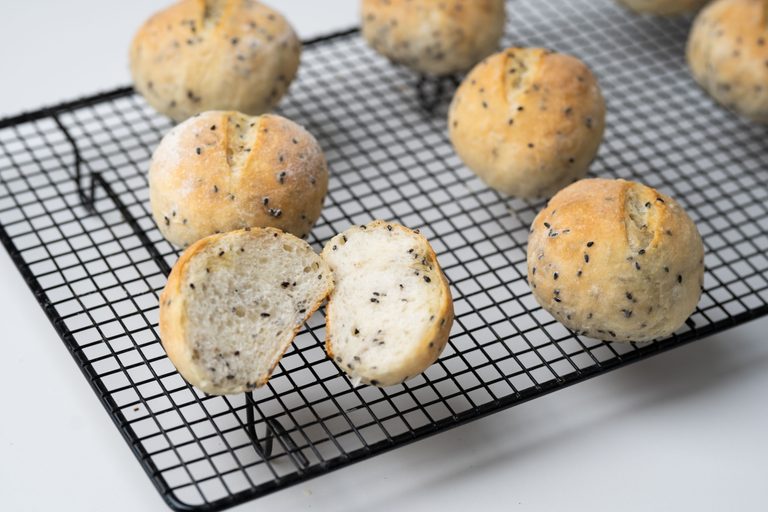
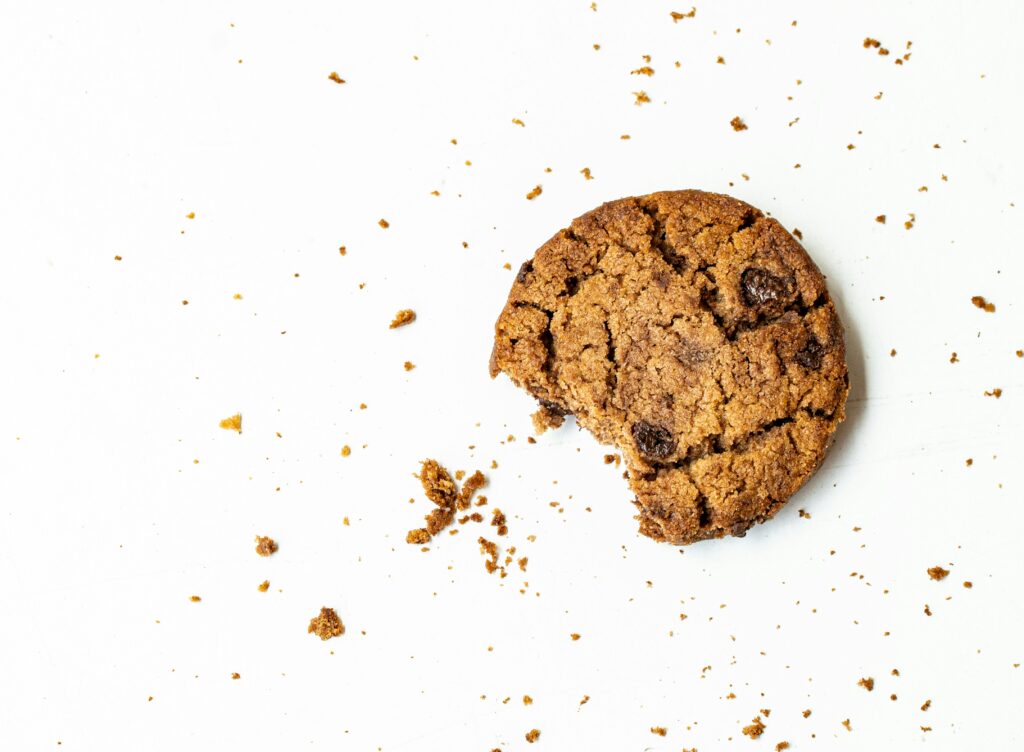
Give the batch ten minutes — five on the pan, five on a rack — then look again. An underbaked cookie has a center that’s still wet rather than soft. Break one in half. Set crumb tears into crumbs; raw dough pulls apart in damp strands and leaves a paste that sticks to the roof of your mouth. That paste is the clearest of all the signs cookies are undercooked, and it takes four seconds to check.
The other reliable signals are surface and structure. The middle holds a wet sheen while the edges have gone matte. Cracks that opened during baking look damp inside. Slide a thin spatula under a cooled cookie and lift it an inch: a set one holds its shape, an underbaked one droops and folds over the blade. Spread is worth reading too, though it runs the opposite way to what you would guess: a cookie that stayed thick and domed instead of flattening usually set before it had time to spread, which is what a hot oven or very cold dough does. Some also smell faintly of raw flour, which a finished cookie never does.
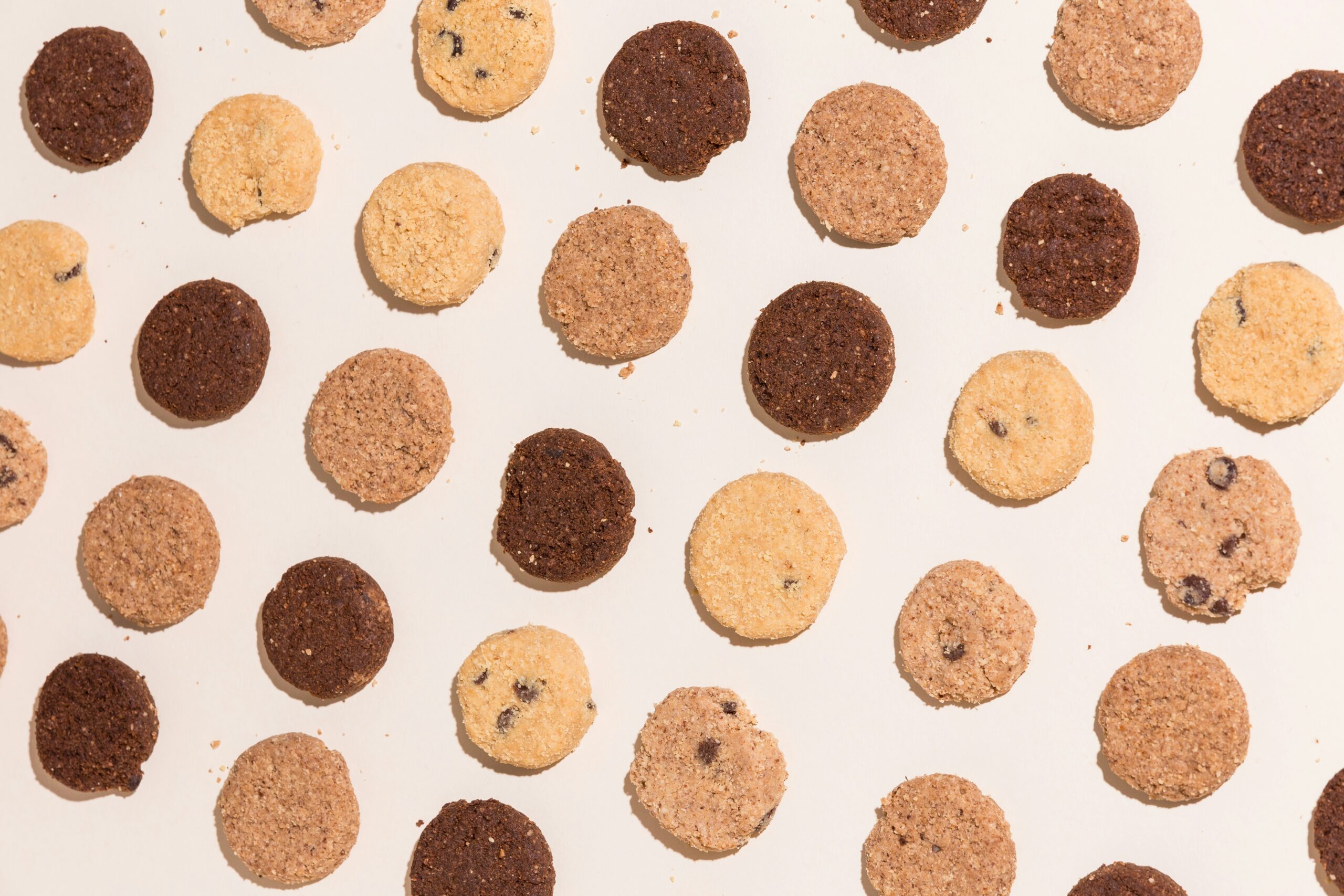
Color is the cue everyone reaches for first, and it’s the one that fails most often. Golden-brown only means something on a pale dough. On a dark or heavily spiced dough it tells you nothing at all, which is where most of the guessing happens.
| Cookie type | Is golden-brown a usable cue? | Judge this instead |
| Chocolate chip and other drop cookies | At the edges only | Browned, matte edges with a center that has puffed and lost its liquid look |
| Sugar, shortbread, snickerdoodle | Barely — they finish pale on purpose | An edge gone dull rather than shiny, with a center that feels firm rather than wet |
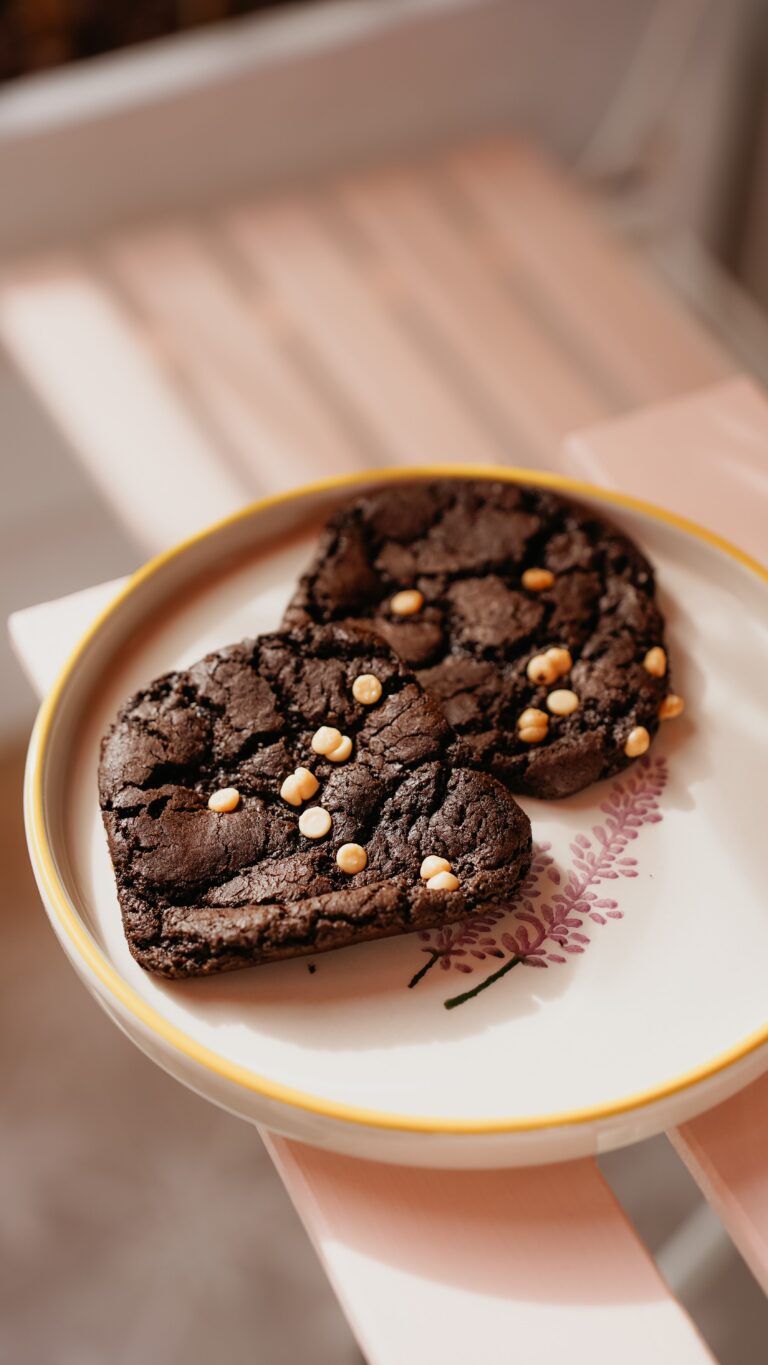
| Double chocolate and black cocoa | No | A dry, matte top with set cracks; the center should spring back under a fingertip |
| Gingerbread and molasses | No | A firm edge and a center that leaves no smear on your finger |
| Oatmeal and thick bakery-style | Partly | Break one open — oats absorb moisture late and hide a wet middle |
How to Test a Cookie for Doneness
Work through this in order. The first three steps happen at the oven, the rest on the counter.
1. Start checking two to three minutes before the earliest time the recipe gives. Open the door once, look, close it — repeated opening drops the oven temperature and drags out the bake.
2. Read the edge-to-center contrast. Edges should be set and matte with the center puffed and no longer glossy-liquid. That’s the pull point for most drop cookies.
3. Rest the tray on a wire rack for five minutes without moving the cookies. This is the carryover window, and skipping it makes every test below read as a false fail.
4. Slide a thin spatula under one cookie and lift it an inch. If it bends and folds over the blade, the structure hasn’t set.
5. Press the center with a fingertip. It should spring back and leave your finger clean. A dent that stays put and glistens means the middle is still dough.
6. Push a toothpick or thin skewer through the center. Moist crumbs are fine and expected. Wet strands of batter aren’t. Aim between the chocolate chips — melted chocolate smears the toothpick and fakes a failed test every time.
7. Break one cookie in half after ten minutes. Nothing else tells you as much, and you were going to eat one anyway.
An instant-read thermometer adds a number to all of that, with one caveat. A cookie is thin and sheds heat fast, so the reading falls while you watch it — probe in through the side, into the middle, and read it within a couple of seconds. Thermo works puts a standard chocolate chip cookie at 180°F, and King Arthur gives 195°F to 200°F for a thick skillet cookie. That spread is wide because the number varies with the type of cookie.
Treat it as a floor rather than a precise target: a center reading well under 180°F hasn’t set. The other edge of the same judgement matters for beginners — a cookie that already looks done all the way across in the oven is heading for overbaked, because it still has three to five minutes of cooking left.
Are Undercooked Cookies Safe to Eat?
Two separate hazards sit in raw cookie dough, and only one of them is the famous one. Raw eggs can carry salmonella. Raw flour can carry E. coli and salmonella too, and that’s the risk most people have never heard of. Flour is a raw agricultural product: grain can pick up bacteria in the field, and milling, sifting and bleaching apply nowhere near enough heat to kill anything. A 2016 outbreak traced to contaminated flour sickened 63 people across 24 states.
Baking is the step that removes both, so the answer splits cleanly. A center that’s soft, warm and set has been through the heat and is fine. A middle that’s still recognisably dough hasn’t, and eating it carries the same risk as licking the bowl.
If you get unlucky, the timing is slow enough that most people never connect the illness to the cookies. Salmonella symptoms usually start anywhere from six hours to six days after eating. E. coli typically takes three to four days. Both bring stomach cramps, diarrhea that can turn bloody and vomiting, though salmonella usually runs a fever where E. coli often runs little or none. A small share of E. coli infections progress to hemolytic uremic syndrome, a type of kidney failure.
Risk isn’t spread evenly. Young children, adults over 65, pregnant women and anyone immunocompromised face both a higher chance of serious illness and less margin if it happens. For them, a raw middle isn’t a judgement call — re-bake the tray or bin it. Note too that pasteurized eggs and heat-treated flour are what make packaged edible cookie dough safe raw; they do nothing for a tray baked from an ordinary recipe and pulled early.
Why Your Cookies Come Out Raw in the Middle
Start with the oven, because it’s the most common cause and the one nobody can see. Home ovens are far less accurate than the dial suggests. A swing of around 25°F either side of the set point counts as normal, since the heating element cycles on and off rather than holding steady, and Cook’s Illustrated testing found two ovens set to the same number sitting as much as 90°F apart. An oven running hot browns the outside on schedule while the middle is still catching up, which is the exact pattern behind cookies raw in the middle and cooked at the edges. If your cookies come out hard at the edges and doughy in the middle every time, that combination is the fix: drop the setting 25°F, move the tray to the center rack, and add a few minutes. An oven thermometer costs a few dollars and turns an invisible variable into a number you can adjust around.
Thickness is the second suspect, and it compounds the first. A three-tablespoon scoop needs a lower temperature and a longer bake than a one-tablespoon scoop, not the same bake with two minutes tacked on. For thick cookies, drop the oven 25°F and add three to four minutes. The heat then has time to reach the middle before the outside sets hard.
After those two, the smaller variables. Dark metal pans absorb more heat and run the bottoms and edges ahead of the centers, while insulated sheets slow the base so much that the middle lags. A rack set too low bakes from underneath. Dough straight from the fridge starts colder and needs a few extra minutes, and scooping onto a hot pan from the previous batch makes the dough spread before it bakes. At altitude, lower air pressure shifts moisture loss and set times enough that most sea-level recipes need adjusting.
Saving the tray in front of you
You can put undercooked cookies back in the oven, and it usually works. How well depends on how long they’ve been out.
- Still warm and on their original pan: straight back in at 325°F for three to four minutes, then re-test. This is the version that rescues cleanly.
- Fully cooled: 300°F for about five minutes. They’ll bake through, but expect a firmer, drier cookie than the recipe intended — the moisture lost on the rack doesn’t come back.
- Center still liquid dough after cooling: treat it as raw dough. Re-bake properly or throw it out. Refrigerating it overnight slows the bacteria without removing them.
- Baked through but crumbly: crumble it into a parfait, layer it through a trifle, or scatter it over ice cream.
- Deliberately underbaked and frozen for later: fine, unless they get eaten straight from the freezer. Finish them in the oven first.
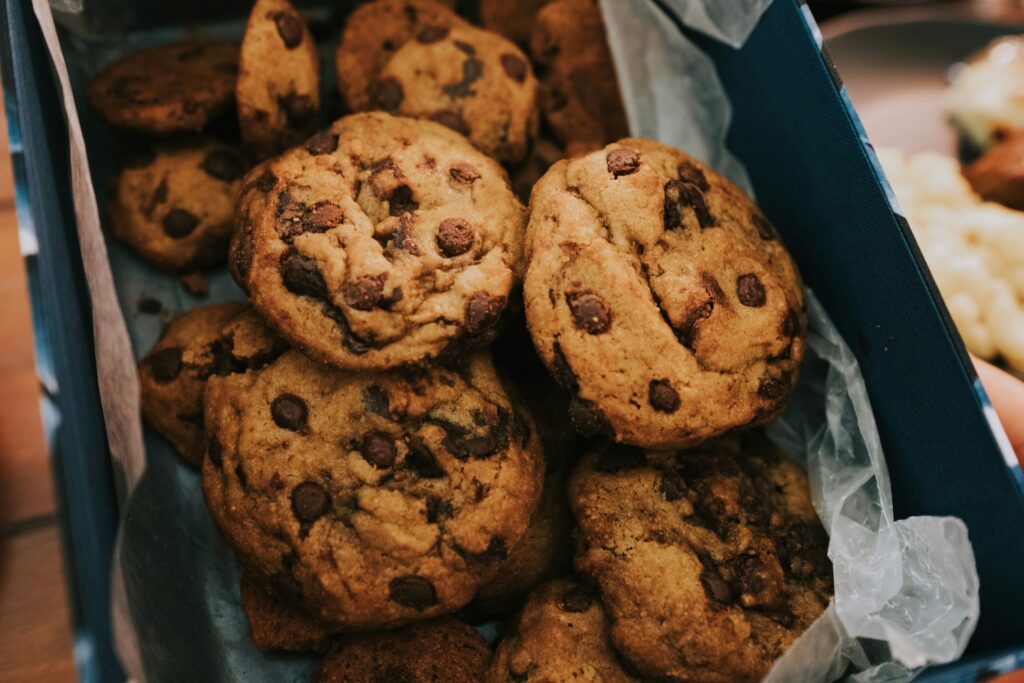
Undercooked Cookie FAQs
Can you put undercooked cookies back in the oven?
Yes. Warm cookies on their original pan go back in at 325°F for three to four minutes and come out close to right. Cooled cookies need a lower oven, around 300°F for five minutes, and finish drier because they lost moisture on the rack. Re-test the center before you trust the second bake.
Are underbaked cookies safe the next day?
No safer than they were the night before. Time in a container doesn’t remove salmonella or E. coli, and refrigeration only slows bacteria rather than killing them. If the middle is still raw dough, the fix is heat: bake them through, then eat them. Storage is not a substitute for a finished bake.
How to determine if a cookie is fully cooked without a toothpick?
Use the spatula and fingertip tests. Lift a cooled cookie an inch on a thin spatula — if it folds, the structure hasn’t set. Then press the center: it should spring back and leave your finger clean. Breaking one in half is faster than either and gives you a straight answer.
Can I use a toothpick to check cookie doneness?
You can, with two adjustments. Cookies are thin, so push the toothpick into the center at a shallow angle rather than straight down, and steer clear of chocolate chips, which coat it in melted chocolate and mimic raw dough. Moist crumbs mean done. Wet batter clinging to the pick does not.
Should I let cookies cool on the baking sheet?
For about five minutes, yes. That rest is when carryover heat finishes the center and the cookie firms up enough to move without tearing. Leave them much longer and the pan keeps baking the bottoms. Five minutes on the sheet, then a wire rack, suits almost every drop cookie.
How does altitude affect cookie cooking time?
Above roughly 3,000 feet, lower air pressure makes moisture evaporate faster and leaveners work harder, so cookies spread more and can set unevenly. The usual adjustments are a slightly hotter oven, a shorter bake and a little extra flour. Doneness cues don’t change — a set center is still a set center.
Why did the oats in my cookies taste undercooked?
Oats absorb liquid slowly, so they can stay chewy and raw-tasting in a cookie that’s otherwise baked. Old-fashioned rolled oats do this more than quick oats. Resting the dough for 30 minutes before baking lets the oats hydrate first, which fixes the texture without extra oven time.
The Test Worth Doing Every Time
Keep the ten-minute rule if you keep nothing else.
Every doneness test run at the oven door is a prediction, because the cookie is still cooking when you make it.
Give the tray five minutes on the pan and five on the rack, then break one open. Wet strands mean three more minutes at 325°F. Crumbs mean stop.